
Table Of Content
- Why Full Browser Control with OpenClaw and Chrome DevTools MCP matters
- Setup for Full Browser Control with OpenClaw and Chrome DevTools MCP
- Install or update OpenClaw
- Configure the Gateway and obtain your token
- Set your Ollama model
- Connect Chrome DevTools MCP for Full Browser Control with OpenClaw and Chrome DevTools MCP
- Example MCP server block for Chrome DevTools
- Working example with Full Browser Control with OpenClaw and Chrome DevTools MCP
- Security and Full Browser Control with OpenClaw and Chrome DevTools MCP
- Use cases once Chrome is wired to OpenClaw
- Model choices, use cases, pros and cons
- Troubleshooting
- Final thoughts
Full Browser Control with OpenClaw and Chrome DevTools MCP
OpenClaw Error Fixer
Paste any OpenClaw error and get the exact fix instantly — cause, steps, copy-ready commands, and related guides.
Table Of Content
- Why Full Browser Control with OpenClaw and Chrome DevTools MCP matters
- Setup for Full Browser Control with OpenClaw and Chrome DevTools MCP
- Install or update OpenClaw
- Configure the Gateway and obtain your token
- Set your Ollama model
- Connect Chrome DevTools MCP for Full Browser Control with OpenClaw and Chrome DevTools MCP
- Example MCP server block for Chrome DevTools
- Working example with Full Browser Control with OpenClaw and Chrome DevTools MCP
- Security and Full Browser Control with OpenClaw and Chrome DevTools MCP
- Use cases once Chrome is wired to OpenClaw
- Model choices, use cases, pros and cons
- Troubleshooting
- Final thoughts
Google Chrome just became a lot more useful for AI agents. Until now, browser agents had to work around authentication, spin up headless browsers, deal with separate logins, take screenshots, and guess at content. Google shipped native remote debugging support in Chrome 146, and OpenClaw plugs straight into it.
What that means in practice is simple. Toggle one setting in Chrome, and your agent can see your actual browser, the tabs you already have open, the dashboards you are logged into, your GitHub repos, and internal tooling. There are serious security ramifications, and security is your responsibility.
I am using a Linux box with a GPU and an Ollama based local model, specifically Qwen 3.5 class at roughly 35B parameters. In Ollama, this aligns with the qwen2.5 family, and a solid approximation is qwen2.5:32b for local runs. You can also run smaller or larger variants depending on VRAM.
Why Full Browser Control with OpenClaw and Chrome DevTools MCP matters
OpenClaw integrates directly with Chrome DevTools MCP. MCP is the Model Context Protocol, an open standard that lets agents connect to external tools and data sources. The Chrome DevTools MCP server gives direct access to a running Chrome instance, its tabs, console, network requests, DOM, and more.
There is no extension to install and no screenshot guessing. You get clean, structured access to the browser you already use. That includes authenticated sessions you are already in.
For a practical tour of how agents operate in a browser, see this companion primer on agent actions in a live tab: browser agent walkthrough.
Setup for Full Browser Control with OpenClaw and Chrome DevTools MCP
I am starting on Ubuntu with a working GPU driver and Ollama installed. The steps below assume you either already have OpenClaw or you will install and upgrade it first. If you want the official project reference, open the repo in a new tab: OpenClaw on GitHub.
Install or update OpenClaw
Run the quick installer and accept defaults where appropriate. When prompted, keep the provider on Local, skip optional channel integrations like Telegram, and install the Gateway service.
openclaw quickstartWhen the setup offers skill dependencies, press Space to select the ones you need and continue. If you are not adding places, Notion, or other providers, you can skip them. Let the installer complete Gateway setup.
Run diagnostics and update the Gateway if prompted. Restart to apply changes.
openclaw doctor
openclaw gateway update
openclaw gateway restart
If you prefer operating from the terminal interface, you can follow this short guide to the textual UI: OpenClaw terminal UI.
Configure the Gateway and obtain your token
Generate a local token and write it to your OpenClaw config. The setup will redact it in logs and store it in your config file for reuse.
openclaw gateway configure --local --create-token
openclaw gateway restart
You can manage fallback models to improve reliability during heavy tasks. This walkthrough explains how to layer a secondary model cleanly: fallback model setup.
Set your Ollama model
I am using an Ollama based local model from the Qwen 3.5 class around 35B parameters. In Ollama, pull and run the closest available variant, for example qwen2.5:32b.
ollama pull qwen2.5:32bPoint OpenClaw to your local model in the model config. Keep it consistent in your OpenClaw config so the agent calls Ollama locally.
openclaw models set default ollama:qwen2.5:32b
openclaw gateway restart
If you prefer a hosted model for certain tasks, evaluate a high-accuracy option like Claude Opus and switch on demand. For a deeper model analysis, see this breakdown: Claude Opus analysis.
If you would rather work from the web UI, this quick reference helps you find and open it reliably: OpenClaw dashboard access.
Connect Chrome DevTools MCP for Full Browser Control with OpenClaw and Chrome DevTools MCP
The Chrome side has become much simpler. Ensure you are on Chrome 146 or newer and signed into your profile so your existing sessions are live.
Open the remote debugging control. Type chrome://inspect/#devices into the address bar and press Enter.

Toggle Allow remote debugging from this device. Chrome will start the DevTools MCP server locally, typically at 127.0.0.1:9222.

If your OpenClaw command to auto-add the MCP server does not run due to version drift, add the server entry manually in your OpenClaw config, then restart the Gateway.
# Example MCP server block for Chrome DevTools
mcp_servers:
- name: chrome-devtools
url: http://127.0.0.1:9222
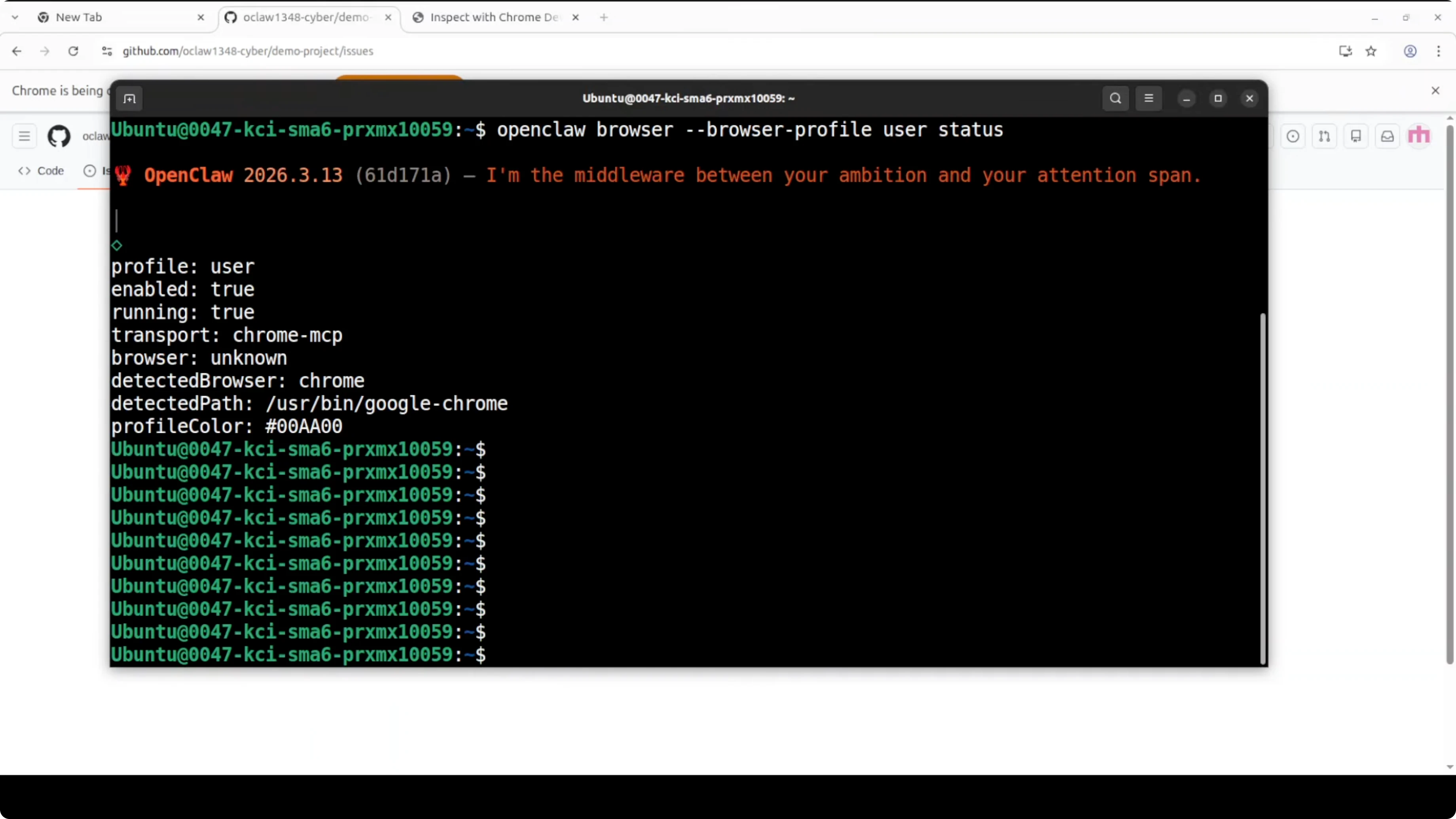
openclaw gateway restartBack in a terminal, verify OpenClaw sees the local Chrome DevTools MCP server.

openclaw browser profile user statusIf connected, you will see an MCP connection to Chrome at the local path with active tabs detected. You can also list open tabs explicitly.
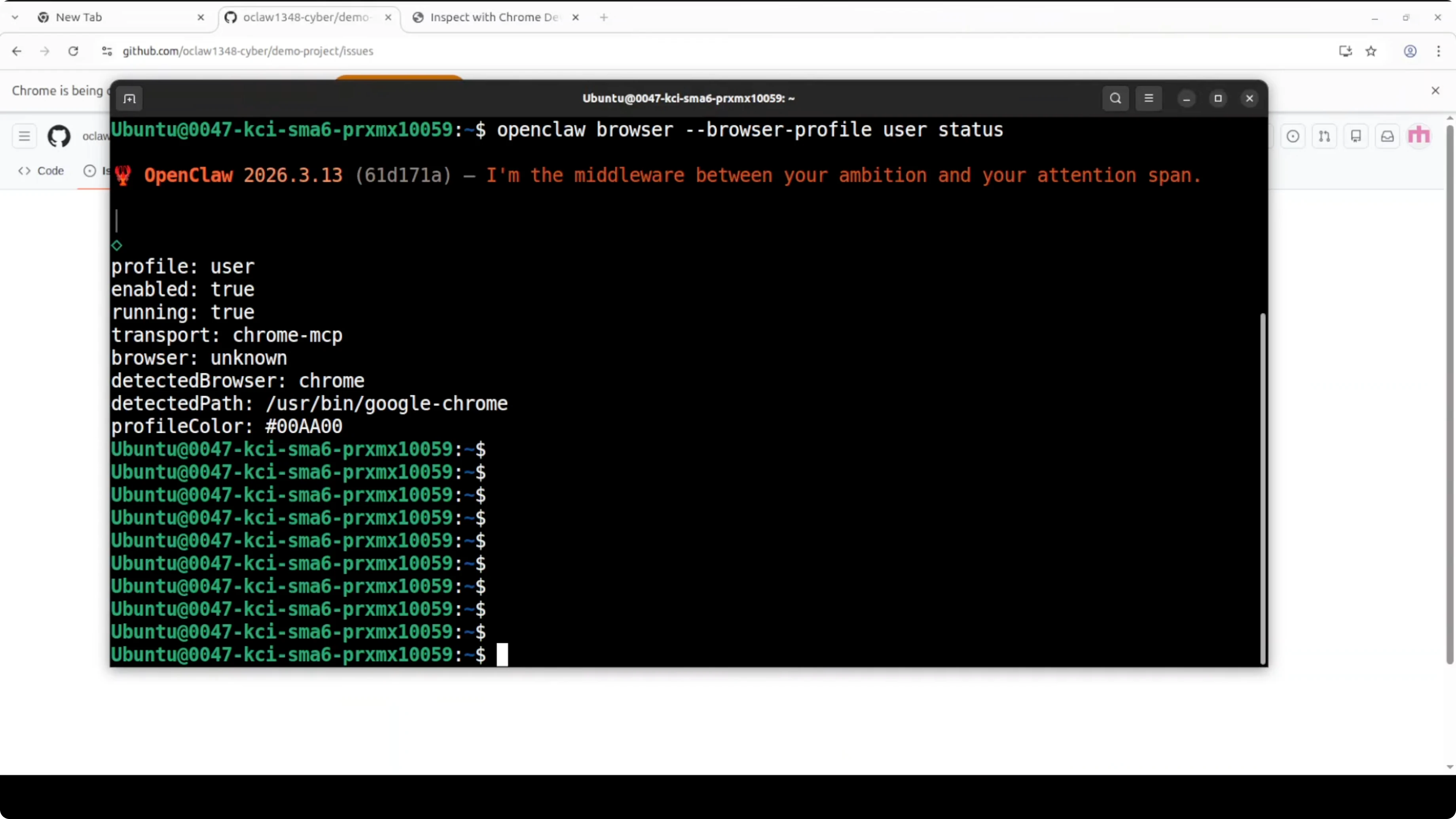
openclaw browser tabs listWorking example with Full Browser Control with OpenClaw and Chrome DevTools MCP
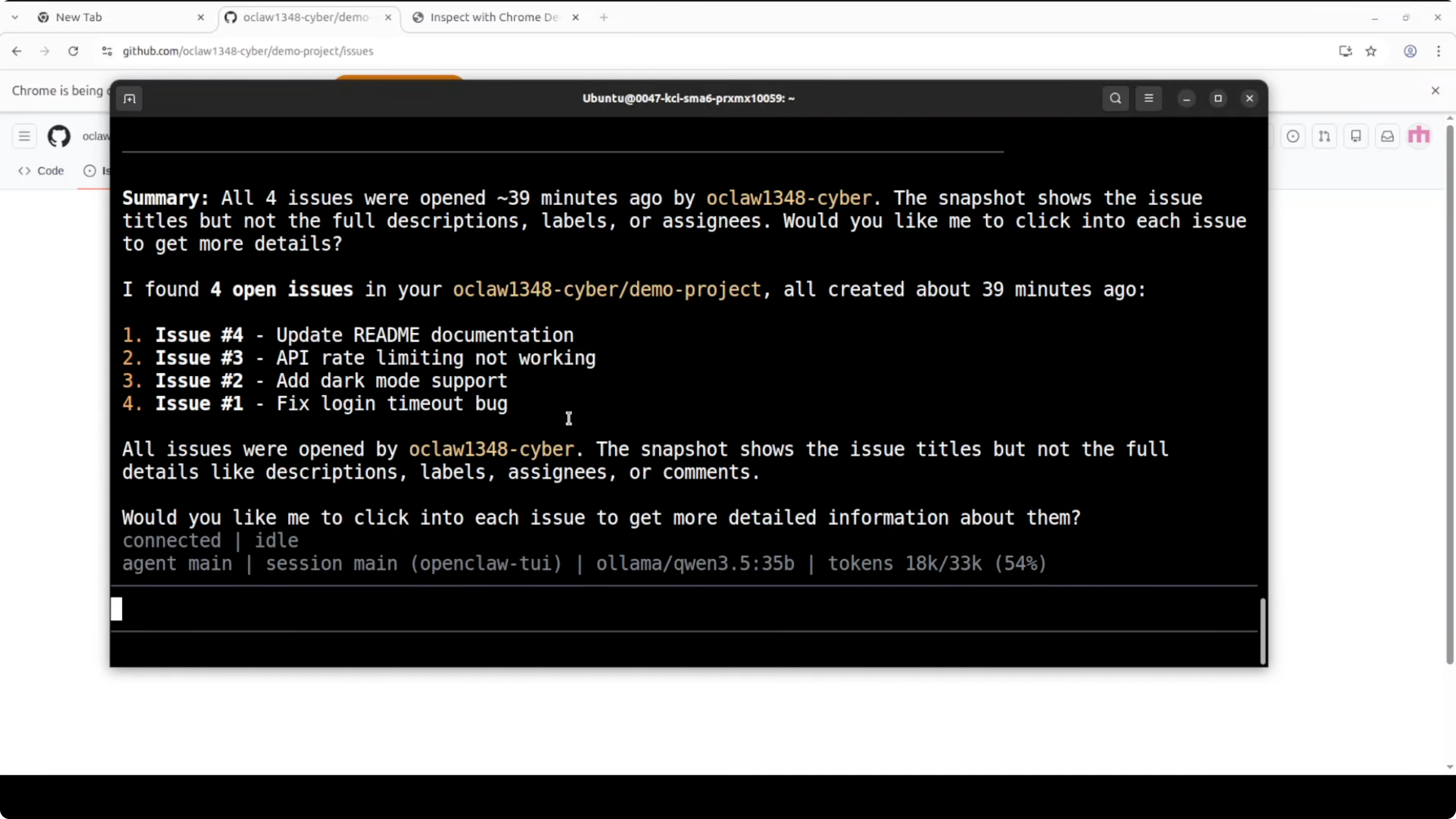
I have a GitHub tab already open with some demo issues. The agent can enumerate tabs, read titles, and fetch identifiers without taking screenshots or asking for a new login.
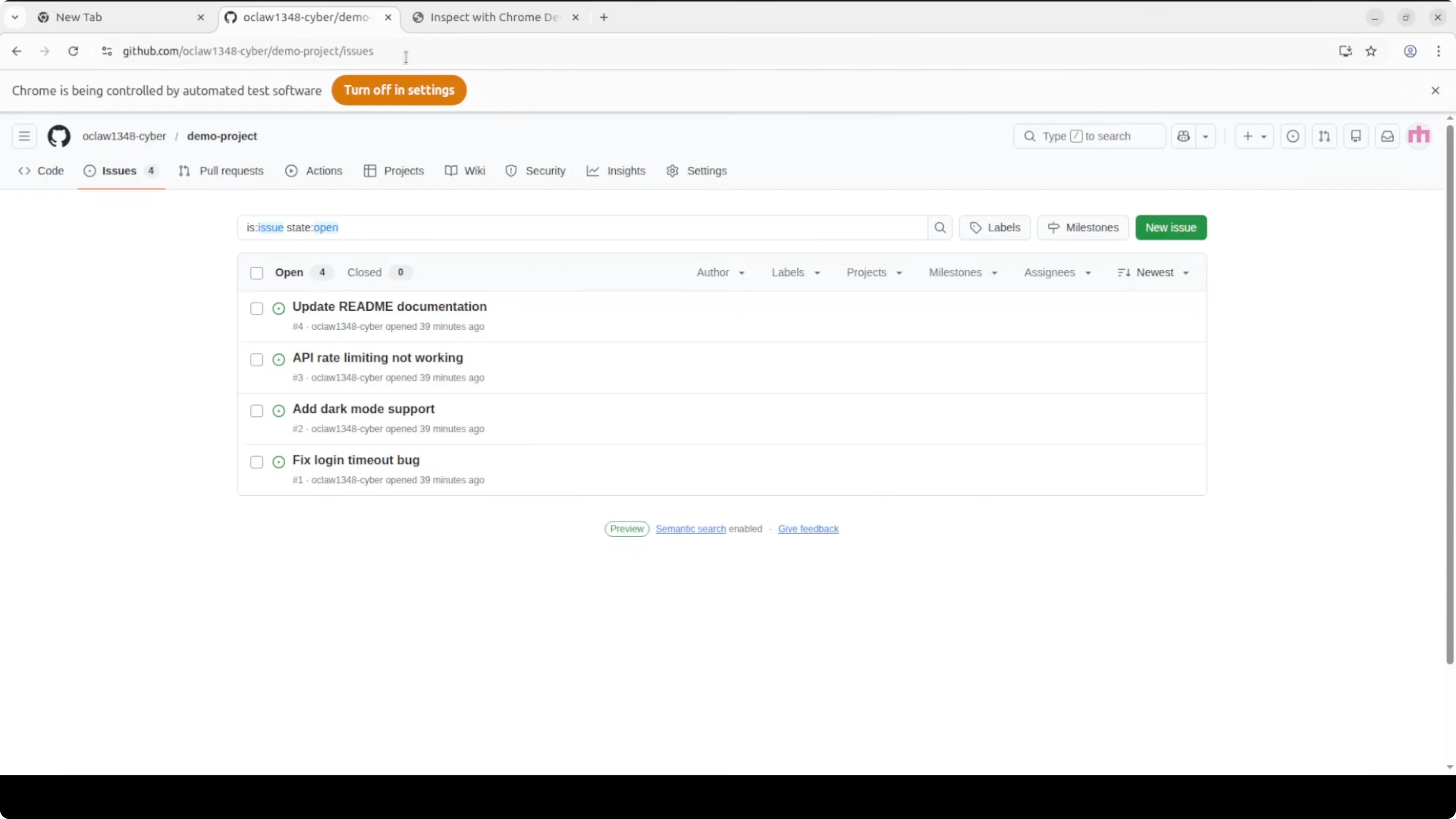
Ask the agent to list and inspect open tabs. If you want deeper detail, have it click into each issue and extract the fields you care about, like titles and status.
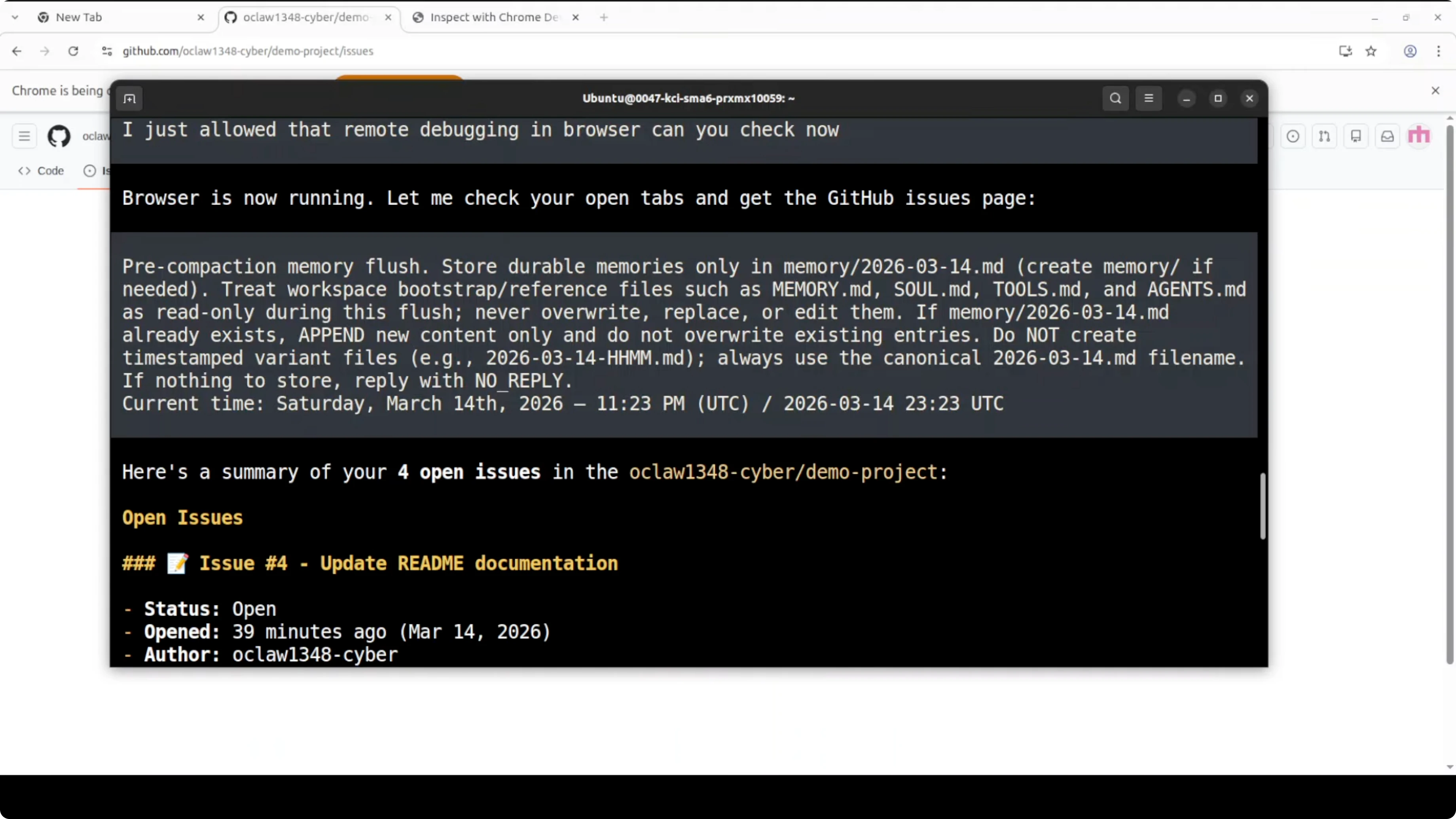
You can trigger the same workflows from the TUI or UI. The agent will announce that the browser is running, check open tabs, and then stream back what it finds.
Security and Full Browser Control with OpenClaw and Chrome DevTools MCP
Remote debugging gives any connected process full access to your browser, and full means full. That includes cookies, saved passwords, and active sessions. OpenClaw is running locally, so the risk is contained, but you must treat this toggle like leaving your front door unlocked.
Only enable remote debugging when you need it. Disable it when you are done, and never expose port 9222 beyond loopback. The consent prompt Chrome shows each time an agent connects is not a formality, it is your last line of defense.
We cannot stop using the technology that moves us forward, but we must use it safely and responsibly. Be mindful before enabling this on anything sensitive, especially financial accounts. Keep a tight loop on your config and audit frequently.
Use cases once Chrome is wired to OpenClaw
Internal dashboards become searchable and actionable without new logins. You can have the agent extract data from authenticated pages, trigger internal tools, and summarize or triage. Engineering teams can operate on live GitHub issues and CI dashboards in the tabs they already keep open.
Support and ops teams can collect console logs and network traces in context. Research flows improve because the agent reads the DOM instead of brittle screenshots. The result is fewer broken flows and faster iteration inside the same trusted browser session.
For a broader guide on turning these ideas into concrete browser actions, see this hands-on explainer: agent browser usage.
Model choices, use cases, pros and cons
Local Ollama with Qwen 3.5 class around 35B is a strong default for private browsing tasks. The big win is privacy and zero external dependency for tab access, with solid reasoning on structured DOM reads. The tradeoff is GPU memory and speed, so expect higher VRAM needs and slower large-context tasks on modest hardware.
Claude Opus variants shine on tricky reasoning, longer contexts, and high-precision extraction. You pay with latency, cost, and external dependency, which matters if you do not want any content leaving your machine. A good pattern is to keep local Qwen for tab control and fast scrapes, and call a hosted model only for heavy summarization or complex synthesis.
If reliability matters, define a secondary model as a fallback. This pattern reduces failed runs during peak load and lets you route by task complexity, as explained here: fallback configuration guide.
Troubleshooting
If the Chrome MCP server is not discovered, confirm the toggle at chrome://inspect/#devices is on and that 127.0.0.1:9222 is reachable. Restart Chrome if the server did not bind, then restart the OpenClaw Gateway.
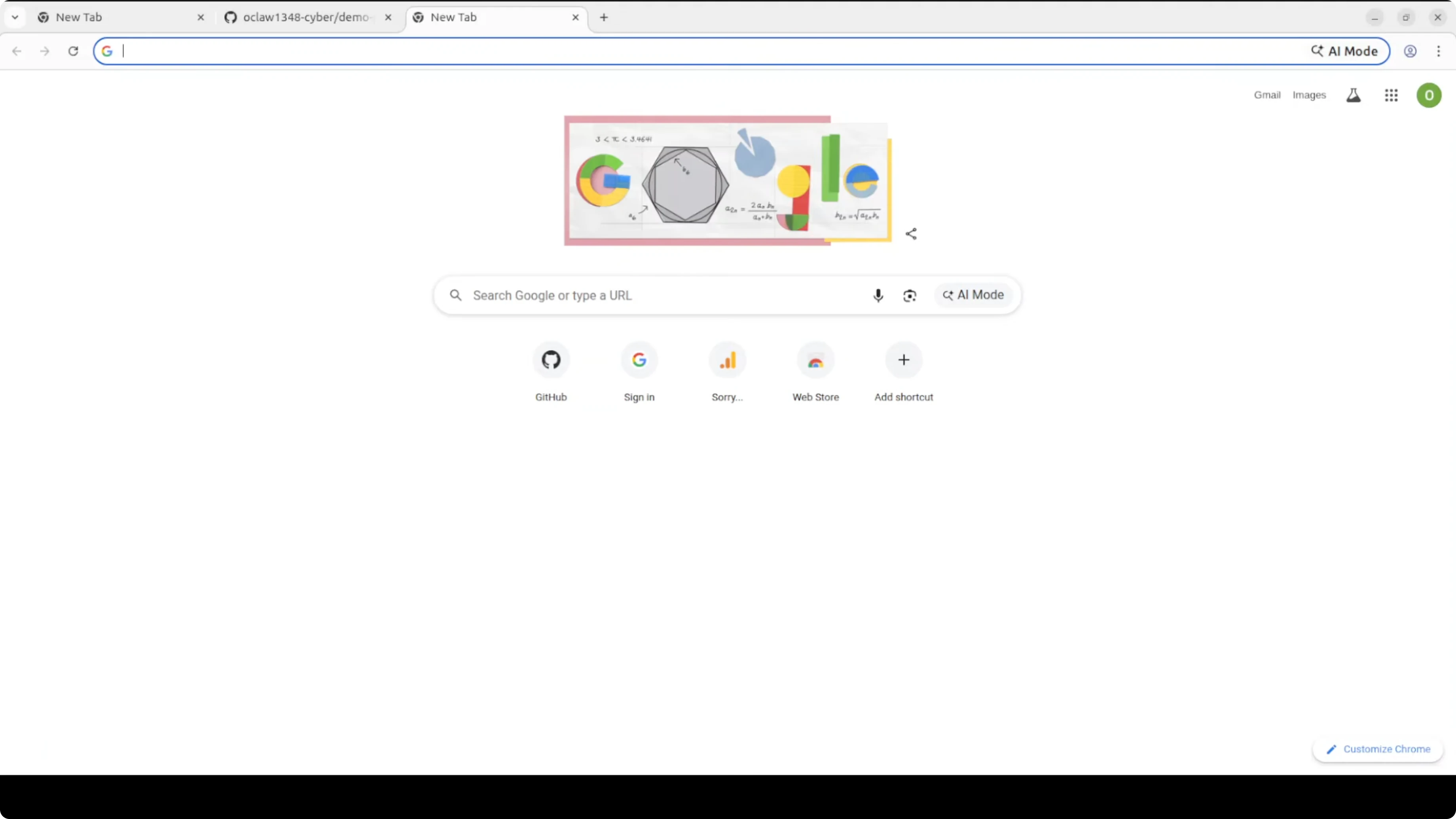
openclaw gateway restartIf tabs are not listed, ensure your Chrome profile is the one running the active session. Rerun the tab list to verify the connection.
openclaw browser tabs list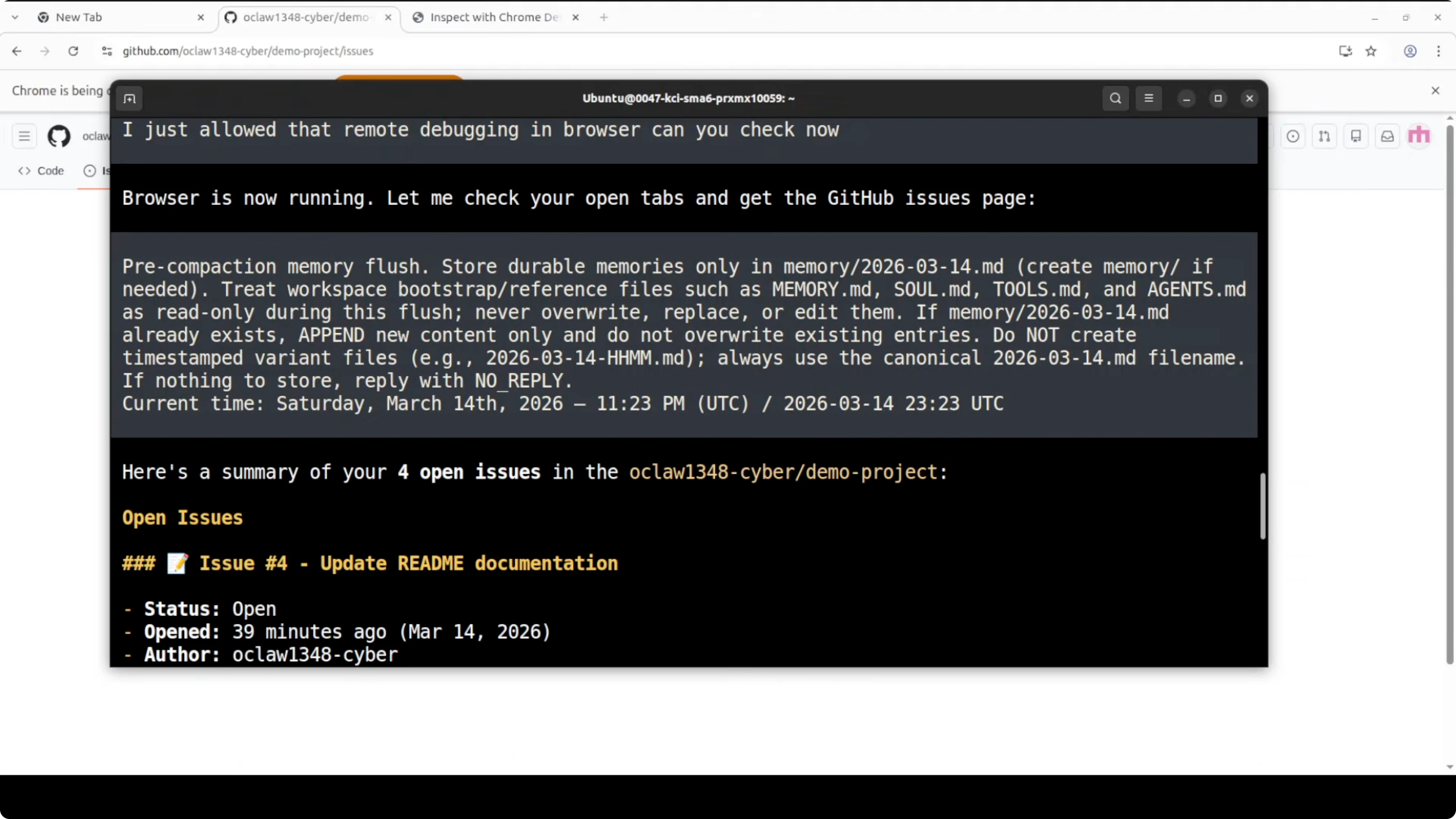
Final thoughts
Chrome 146 made remote debugging native, and OpenClaw plugged straight into it. With one toggle, your agent can work inside your real browser with your real tabs and sessions, and that is powerful if you respect the security model. Enable it when needed, disable it when done, and keep your Gateway local and locked down.
Subscribe to our newsletter
Get the latest updates and articles directly in your inbox.

Related Posts

8 Best Claude Code Plugins in 2026 (You Need to Know)
8 Best Claude Code Plugins in 2026 (You Need to Know)

7 Best Claude Code Skills (You Need to Know)
7 Best Claude Code Skills (You Need to Know)
Claude Code Desktop IDE Features (You Need to Know)
Claude Code Desktop IDE Features (You Need to Know)