
Table Of Content
- What Is Nano Banana Pro?
- Quick Overview
- What Changed From the Previous Nano Banana Model
- Where to Use Nano Banana Pro
- Setup in Gemini
- Core Editing Capabilities Tested
- Remove Unwanted People From a Photo
- Edit Text Inside an Image
- Change Scene Lighting
- Multi-Image Composition
- Transfer a Hairstyle Between Photos
- Combine Multiple Characters in One Shot
- Best Practice: Collage Reference Sheet
- Current Limitation: Lighting Consistency
- Style Transformations
- Turn Photos Into Illustrations or 3D Renders
- Building Consistent Characters and Scenes
- Banana-Themed Series
- Resolution Today and What’s Coming
- Product Mockups and Props
- Complex Figurine Mockups
- Packaging and Lifestyle Shots
- Key Features of Nano Banana Pro
- Practical Step-by-Step Guide
- Workflow for Image Editing in Gemini
- Workflow for Multi-Character Composition
- Workflow for Style Conversion
- Limitations to Keep in Mind
- Final Thoughts
Nano Banana Pro Update: AI Image Model Review
Table Of Content
- What Is Nano Banana Pro?
- Quick Overview
- What Changed From the Previous Nano Banana Model
- Where to Use Nano Banana Pro
- Setup in Gemini
- Core Editing Capabilities Tested
- Remove Unwanted People From a Photo
- Edit Text Inside an Image
- Change Scene Lighting
- Multi-Image Composition
- Transfer a Hairstyle Between Photos
- Combine Multiple Characters in One Shot
- Best Practice: Collage Reference Sheet
- Current Limitation: Lighting Consistency
- Style Transformations
- Turn Photos Into Illustrations or 3D Renders
- Building Consistent Characters and Scenes
- Banana-Themed Series
- Resolution Today and What’s Coming
- Product Mockups and Props
- Complex Figurine Mockups
- Packaging and Lifestyle Shots
- Key Features of Nano Banana Pro
- Practical Step-by-Step Guide
- Workflow for Image Editing in Gemini
- Workflow for Multi-Character Composition
- Workflow for Style Conversion
- Limitations to Keep in Mind
- Final Thoughts
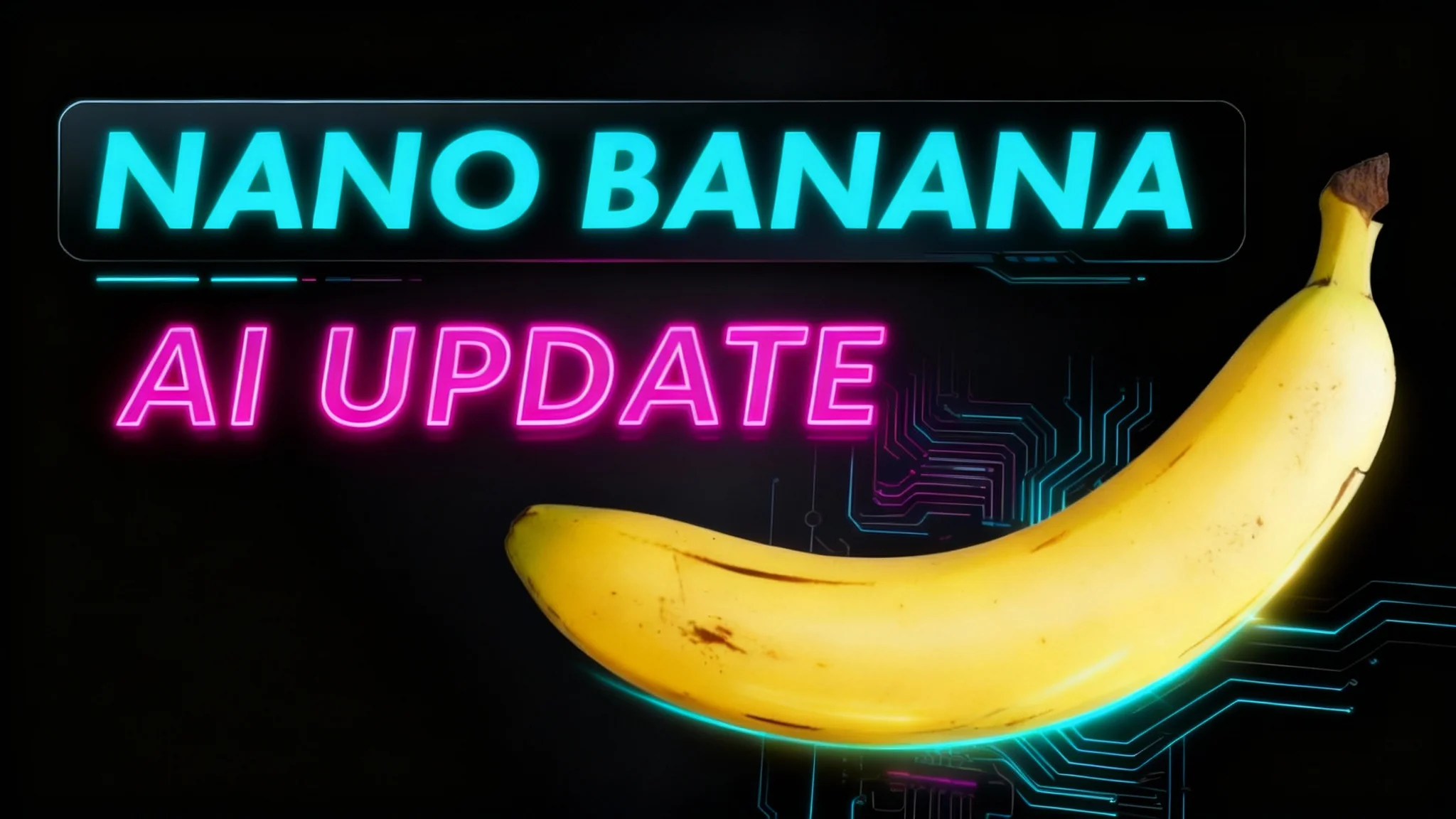
Nano Banana Pro is the new AI image model I’ve been testing, and it delivers clear gains in detail, realism, and editing control. It handles photo generation, precise edits, and consistent characters for storytelling and AI filmmaking.
After extensive use, I consider it the strongest AI image model available right now. Here’s what changed, how to use it, and where it already excels.
What Is Nano Banana Pro?
Nano Banana Pro is an AI image model built for high-quality image generation and editing. It follows prompts closely, composes elements from multiple sources, and maintains character consistency across a series.
Key things it’s built to do:
- Generate photoreal images and cinematic shots
- Edit existing photos with precise control
- Combine multiple characters or references into one scene
- Change styles (illustration, 3D) while preserving key facial features
Quick Overview
| Item | Summary |
|---|---|
| Model | Nano Banana Pro |
| Core strengths | Prompt accuracy, sharp detail, image editing, multi-image composition, consistent characters |
| Where to access | Google Gemini (select the right model and “Create image”) |
| Editing features tested | Remove people, change text in images, adjust lighting, transfer hairstyles, combine characters |
| Style options | Cartoon, 3D/Pixar-style visuals, illustration |
| Current output size in Gemini | ~1392 × 768 (higher-res 2K/4K variants are coming) |
| Notes | Excellent likeness preservation; sometimes inconsistent lighting; small details can blur at current resolution |
What Changed From the Previous Nano Banana Model
One of the first changes you’ll notice is the overall texture and sharpness. The older model often produced softer surfaces and smooth faces. The Pro update adds fine grain, pores, and subtle imperfections that make faces look far more convincing.
Prompt adherence remains strong in both versions, but the Pro outputs look more authentic. On a prompt like “a woman with half her face disintegrating into dust,” both models follow instructions; the Pro version adds believable micro-details across the skin and particles.
Fantasy imagery is also improved. The older model tended to produce a 3D cartoon look even for prompts calling for photographs. In the Pro model, elements like spider hair, webs, and costume surfaces render with far greater fidelity.
Where to Use Nano Banana Pro
Nano Banana Pro is currently available in Google Gemini. Image generation and editing work directly inside the interface once you select the correct model and enable image creation.
Setup in Gemini
Follow these steps:
- Open Google Gemini and switch to the correct “Thinking with 3 Pro” setting.
- Select the Create image option.
- Enter a prompt to generate from scratch, or upload reference images for editing and composition.
You can mix both prompting and editing in the same session to refine results.
Core Editing Capabilities Tested
Remove Unwanted People From a Photo
I uploaded a festival photo crowded with people and asked the model to remove everyone except “the man in the white t-shirt and blue bucket hat.” It eliminated the surrounding crowd cleanly, including distant heads and partial bodies at the frame edges.
Note: background text may change during object removal. In my test, signage ended up with altered wording. That’s easy to correct with a targeted text-edit prompt.
Edit Text Inside an Image
I prompted: “Change the text on the bronze tablet under the Statue of Liberty to ‘Nano Banana Pro is here.’” The model placed the exact phrase correctly, respecting the style and surface.
This level of control is useful for mockups, titles, and scene-specific typography.
Change Scene Lighting
I used: “Change the lighting to a bright sunny day with a bright blue sky.” The model delivered richer color and stronger contrast. It also introduced shadows as if people stood just off-frame. The result looked vivid and coherent.
Multi-Image Composition
Transfer a Hairstyle Between Photos
I dragged two reference photos into the prompt—one of me and one of another person’s haircut—and asked Nano Banana Pro to “change the hairstyle of the man in the black and yellow jacket to the hairstyle in image B.” The model transplanted the haircut onto my image, giving me a clear preview before I commit to a real trim.
Combine Multiple Characters in One Shot
I combined a photo of myself with one of my AI characters. The model kept facial traits accurate, and the hands in the composite were rendered correctly. With three characters in a fashion-shoot composition, it held onto the defining facial details for each person.
Best Practice: Collage Reference Sheet
To preserve likeness across multiple characters:
- Build a single collage sheet with all character references.
- Include 2–4 images per character (front-facing and slight angles help).
- Use that one sheet as your reference input for the composition.
This approach gave me the most reliable identity consistency.
Current Limitation: Lighting Consistency
When combining different source photos, lighting can mismatch. In one composite, my face showed studio lighting while the other character looked like a render under different illumination. You can reduce this by adding a specific lighting prompt, but source-photo differences still matter.
Style Transformations
Turn Photos Into Illustrations or 3D Renders
I asked Nano Banana Pro to convert a studio-style photo into a cartoon illustration. The transformation worked, with a slightly exaggerated chin. A Pixar-style version turned the female character into an Avatar-like look, which wasn’t exactly what I intended, but the 3D version of my own face looked solid.
These conversions are fast ways to explore look development without reshooting.
Building Consistent Characters and Scenes
Banana-Themed Series
I created a character arc centered on a monk with a banana staff:
- Me as a monk in a temple with banana clusters hanging from the staff
- Me on a banana boat exploring a wild landscape
- Me lifting a giant banana overhead
- Me studying in a “banana library”
The character stays consistent across images, and props follow the prompt. As subjects get smaller in the frame, facial detail softens at the current output size.
Resolution Today and What’s Coming
Nano Banana Pro has 2K and 4K variants planned. In Gemini today, the images I downloaded were around 1392 × 768. That’s enough for concepting and social posts, but small elements and micro-details can blur. Higher-resolution variants should improve miniature details, jewelry, and textures on small objects.
Product Mockups and Props
Complex Figurine Mockups
I tested a real souvenir figurine with complex curves, antlers, and varied textures. A beach mockup matched the reference closely, with only minor texture loss on small scale patterns. For a single prompt, the accuracy was high across shape, color, and material.
Packaging and Lifestyle Shots
I generated a collector’s box shot for the figurine. The model added its own “Dragon’s Horde Collector’s Edition” text on the box. I also created a photo of me holding the figure and a necklace featuring the character. The necklace charm was too small to capture every detail, but higher-res output should help.
Key Features of Nano Banana Pro
- Prompt accuracy: Follows complex requests, including composites and text edits.
- Realistic detail: Skin, fabric, and scene elements render with sharp micro-textures.
- Image editing: Remove people, change text, adjust lighting, and rework scenes fast.
- Multi-image composition: Combine characters, transfer hairstyles, and merge elements.
- Likeness preservation: Keeps faces consistent across scenes and styles.
- Style conversion: Turn photos into illustrations, cartoons, or 3D looks.
- Product visuals: Create mockups, packaging shots, and lifestyle images.
- Availability: Works now in Google Gemini with image generation enabled.
- Resolution roadmap: Higher-res 2K and 4K variants are planned.
Practical Step-by-Step Guide
Workflow for Image Editing in Gemini
- Open Gemini and switch to the “Thinking with 3 Pro” option.
- Click Create image.
- Upload your base photo.
- Add a clear prompt (e.g., “Remove all people except the man in the white t-shirt and blue bucket hat”).
- Review the output at 100% zoom for edges, text, and small artifacts.
- If needed, issue targeted fixes (e.g., “Correct the background sign to read [text]”).
- Download the result and archive the prompt for reuse.
Workflow for Multi-Character Composition
- Prepare a collage sheet with all character references (2–4 images per person).
- Upload the collage and your background or base scene if you have one.
- Prompt with specifics: poses, positions, clothing, and camera framing.
- Add lighting instructions so all subjects match (e.g., “soft studio light from camera left, cool rim light”).
- Check hands, faces, and edges; run a follow-up prompt to fix any mismatches.
- Save iterations and note which phrasing produced the best likeness.
Workflow for Style Conversion
- Upload the original photo or composite.
- Prompt the desired style: “Convert to a clean vector cartoon illustration,” or “Render as a cinematic 3D portrait.”
- Specify what must remain consistent (face, outfit, props).
- If proportions stretch or exaggerate too much, guide the model with corrections (e.g., “Reduce chin exaggeration; keep facial proportions natural”).
- Export at the highest available size; archive the prompt for consistent styling across a series.
Limitations to Keep in Mind
- Background text can shift during edits; correct it with a follow-up prompt.
- Lighting may be inconsistent when combining sources; unify with precise lighting instructions and cohesive references.
- Current Gemini outputs are around 1392 × 768; small details on jewelry, figurines, or distant faces may blur.
- Very small props and micro-textures may not fully resolve until higher-res variants arrive.
Final Thoughts
Nano Banana Pro steps ahead of the previous model in texture, prompt fidelity, compositing, and edit control. It handles close-up faces, complex props, and multi-character scenes with a level of detail that supports real creative work.
I’ll continue experimenting with more workflows and will share a guide with 14 practical tips for getting the best results. For now, the combination of edit tools, compositional control, and strong likeness preservation makes this my top pick for AI image generation and editing.
Subscribe to our newsletter
Get the latest updates and articles directly in your inbox.

Related Posts
8 Best Claude Code Plugins in 2026 (You Need to Know)
8 Best Claude Code Plugins in 2026 (You Need to Know)
7 Best Claude Code Skills (You Need to Know)
7 Best Claude Code Skills (You Need to Know)
Claude Code Desktop IDE Features (You Need to Know)
Claude Code Desktop IDE Features (You Need to Know)