
Table Of Content
- How Claw Code and Clawhip Rebuilt the Claude Code Agent System?
- What happened
- Why the notification layer matters
- What you will set up
- Discord setup
- Create a server
- Create an application and bot
- Install ClawHip on Ubuntu
- Prepare the host
- Configure ClawHip
- Interactive config
- Test notifications
- Send a test message
- Trigger from Git
- Watch a tmux session
- run your agent loop here
- How Claw Code and Clawhip Rebuilt the Claude Code Agent System? In practice
- The loop that built Claw Code
- What you need for the full loop
- Troubleshooting
- Common agent pitfalls
- Use cases
- Final thoughts
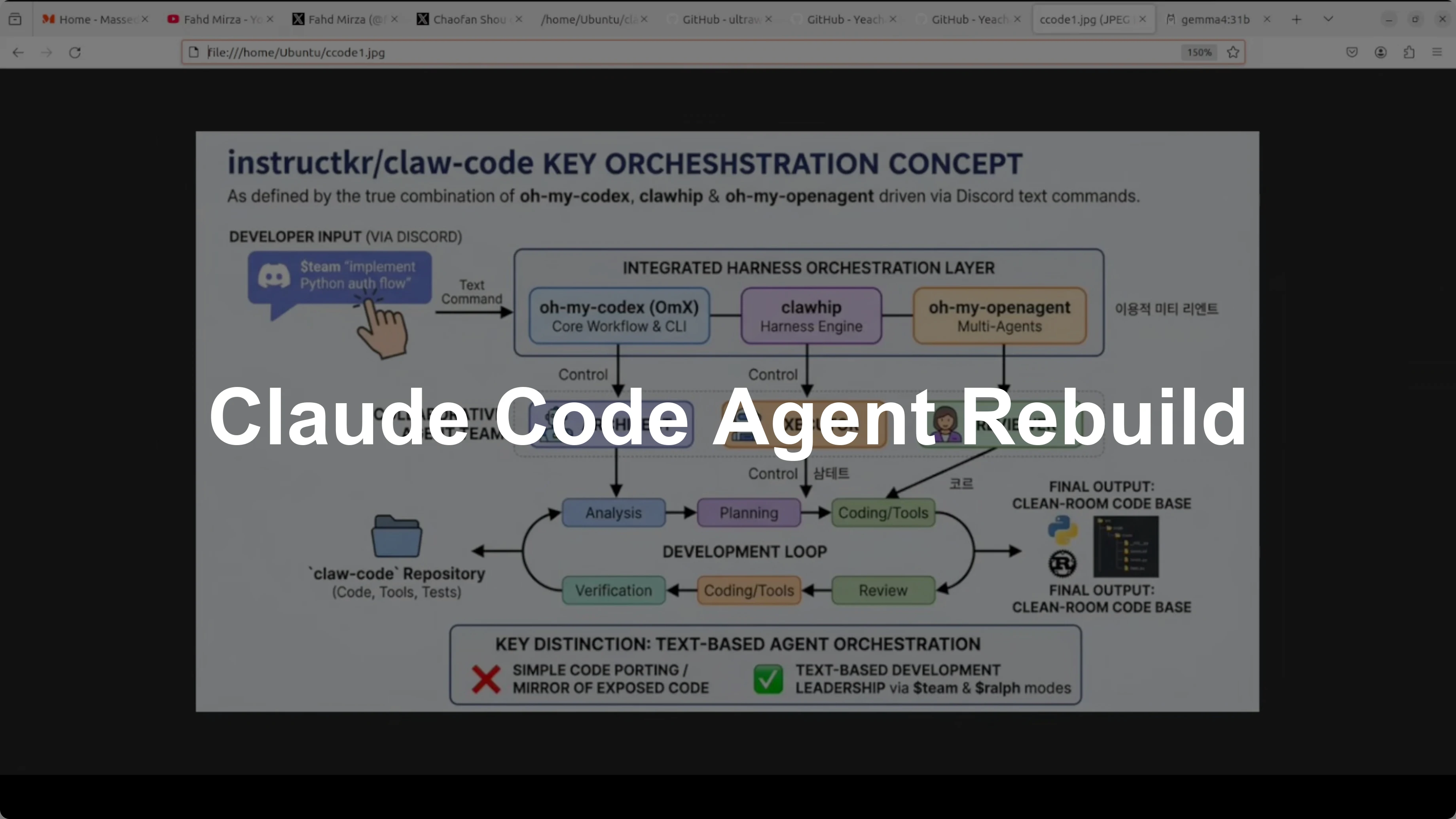
How Claw Code and Clawhip Rebuilt the Claude Code Agent System?
Table Of Content
- How Claw Code and Clawhip Rebuilt the Claude Code Agent System?
- What happened
- Why the notification layer matters
- What you will set up
- Discord setup
- Create a server
- Create an application and bot
- Install ClawHip on Ubuntu
- Prepare the host
- Configure ClawHip
- Interactive config
- Test notifications
- Send a test message
- Trigger from Git
- Watch a tmux session
- run your agent loop here
- How Claw Code and Clawhip Rebuilt the Claude Code Agent System? In practice
- The loop that built Claw Code
- What you need for the full loop
- Troubleshooting
- Common agent pitfalls
- Use cases
- Final thoughts
A few days back, Claude Code’s source code leaked after someone found a JavaScript map file exposed in Anthropic’s NPM registry. That single file contained the entire source of one of the most talked about AI coding tools. A tweet about it racked up around 34 million views and kept climbing.
Within hours, another developer used an autonomous agent system to reverse engineer it and rewrite the entire code base from scratch. A Python rewrite appeared in 2 hours, then a Rust port landed before sunrise on March 31. The repo crossed 50,000 GitHub stars in 2 hours and blew past 167,000 soon after.
The code is not the real story. The system behind it is. ClawHip, OhMyCodex, OhMyOpenAgent, and a few other pieces ran the entire operation autonomously.
How Claw Code and Clawhip Rebuilt the Claude Code Agent System?
What happened
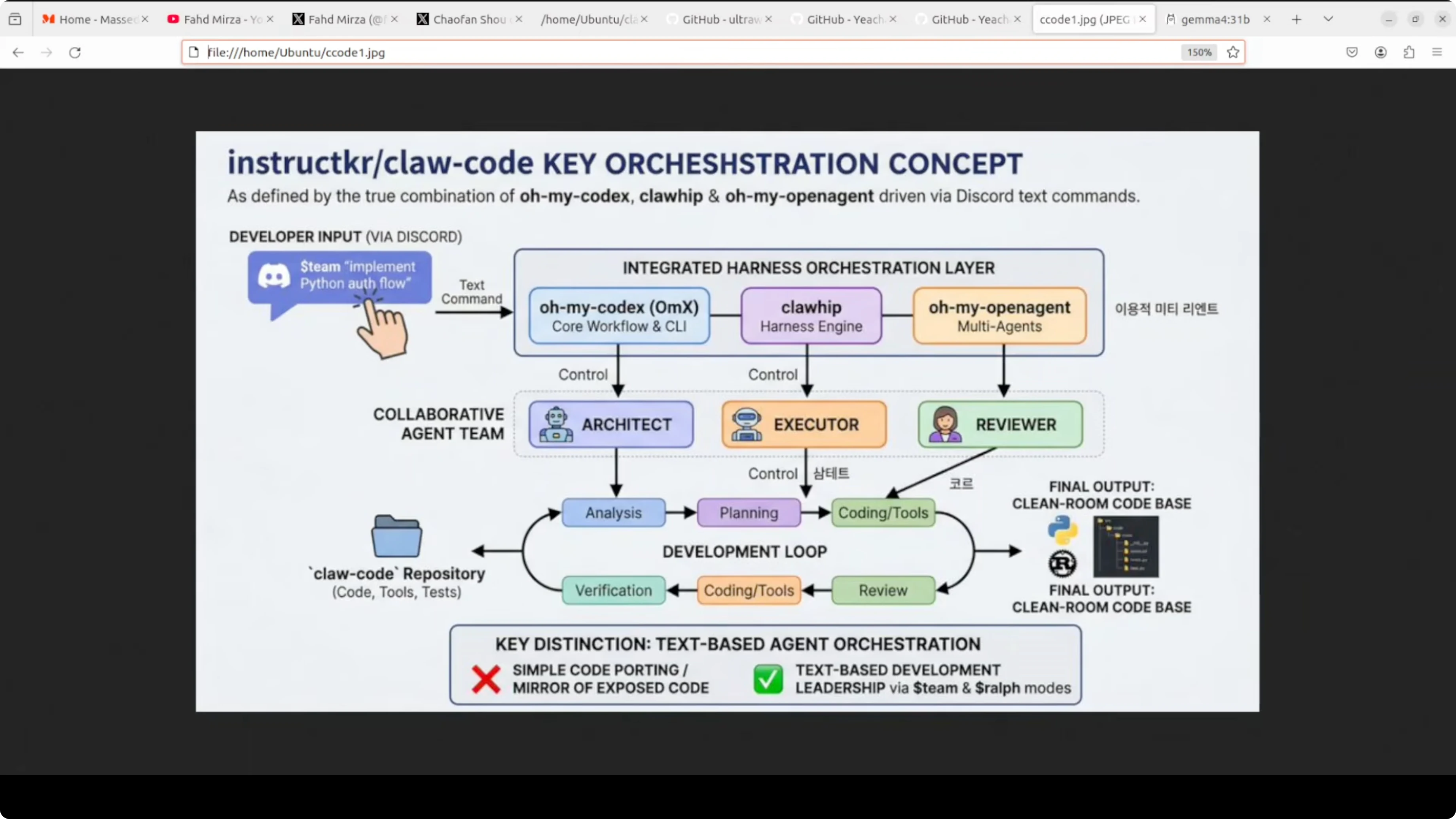
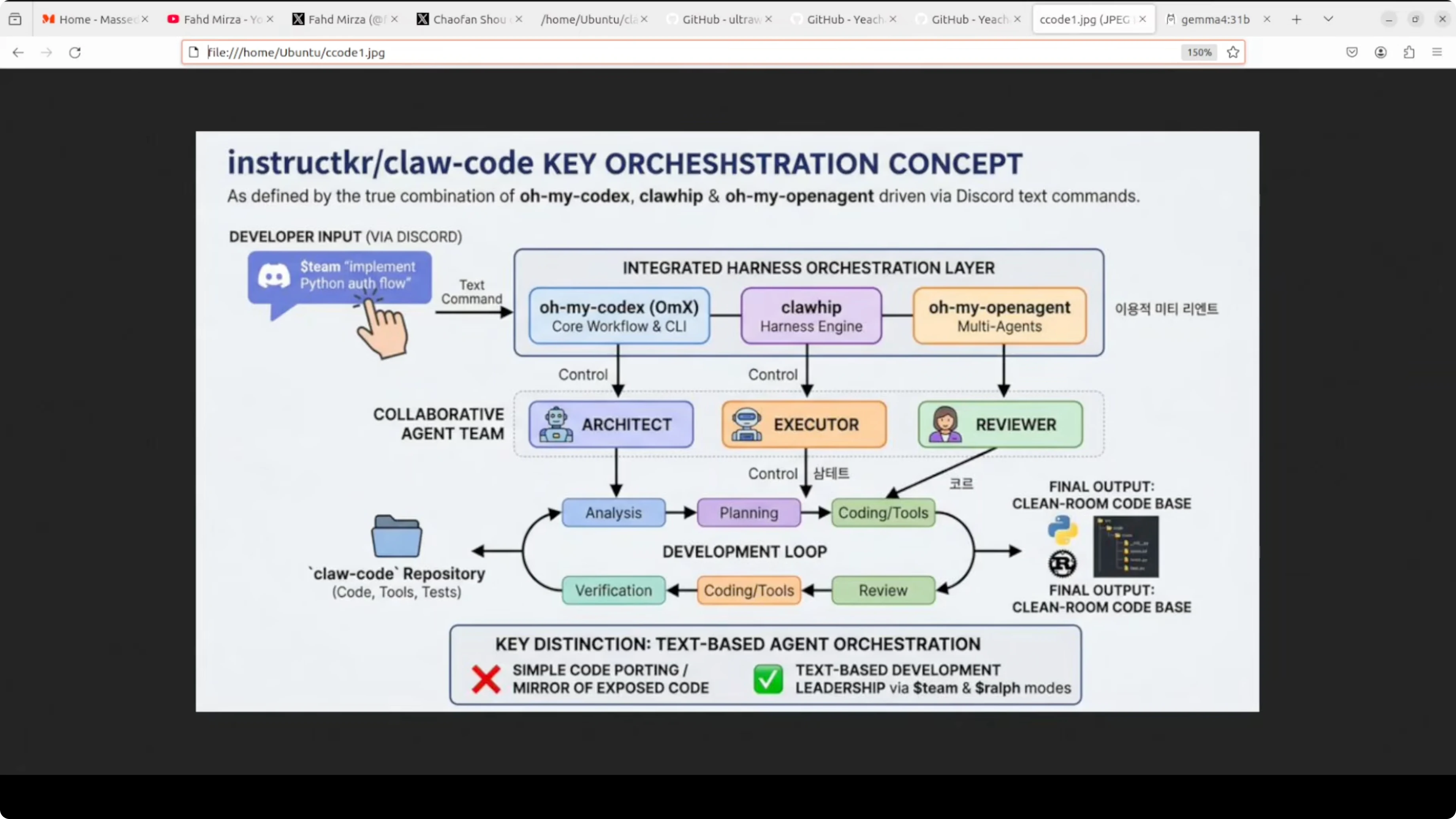
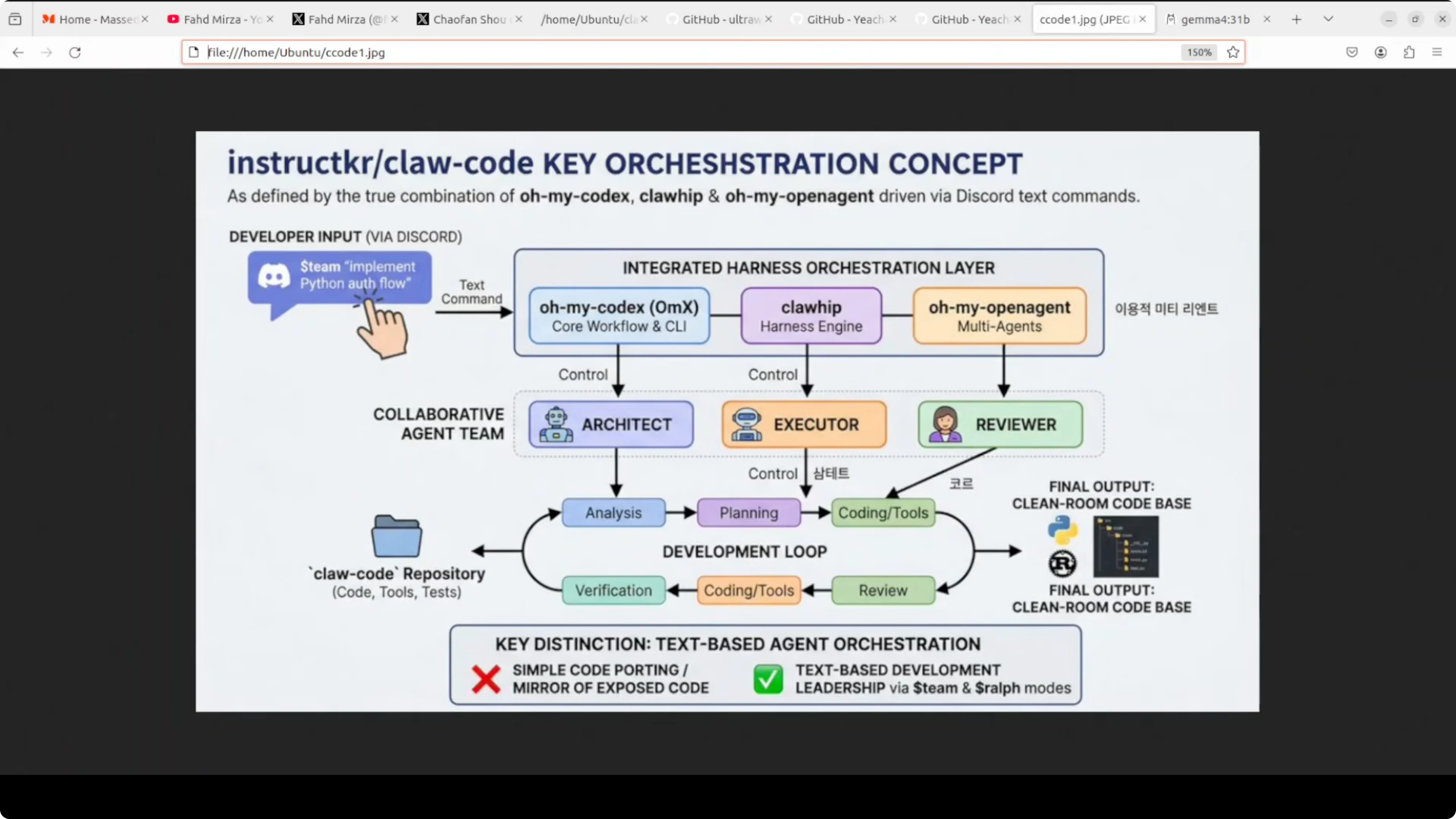
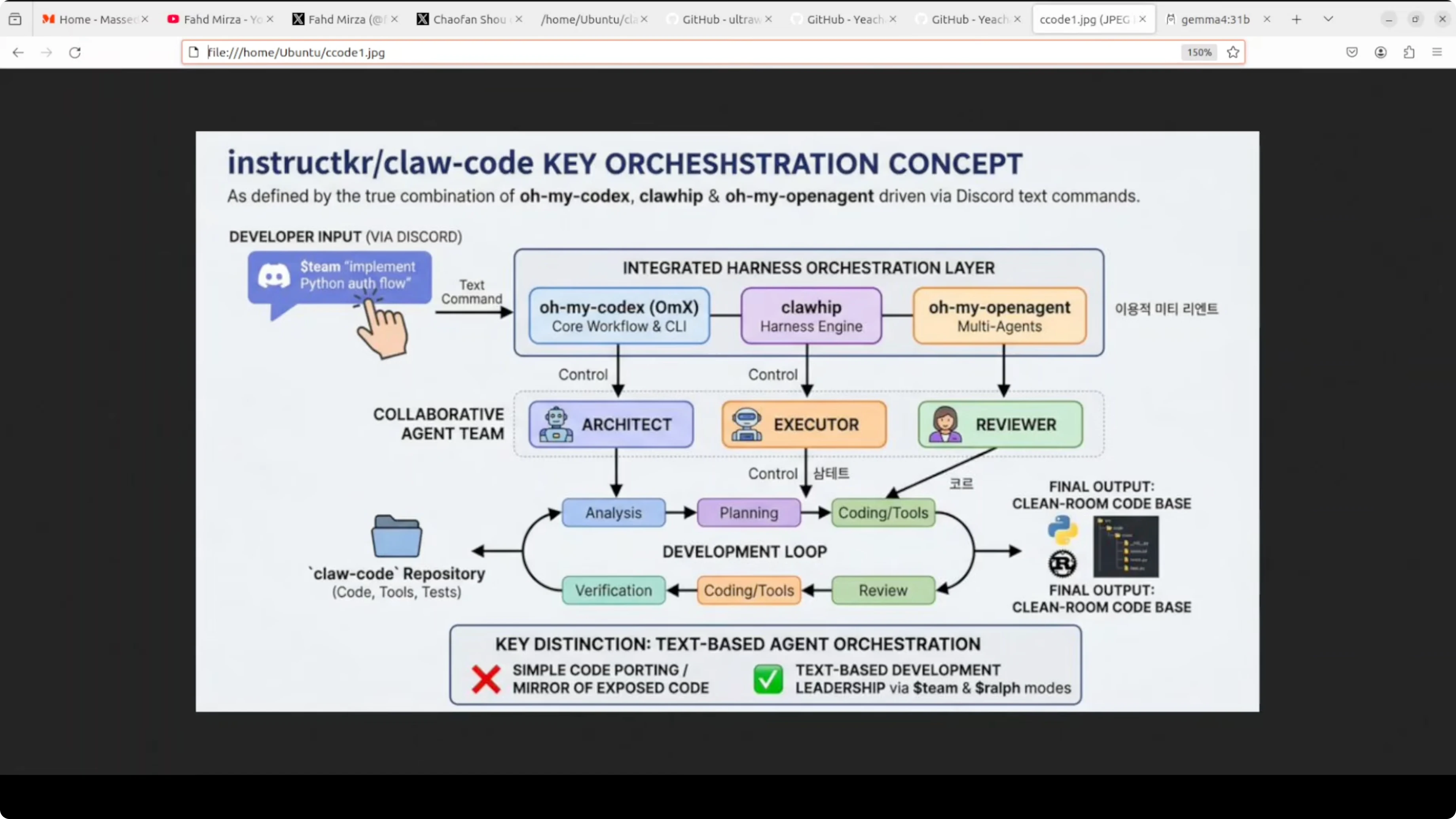
The developer typed a single sentence into Discord, went to sleep, and woke up to a finished port. Architect agents planned the work, executor agents wrote code, and reviewer agents checked it. If something failed, the loop restarted until it passed.
There was no human sitting in a terminal and micromanaging the process. It was just direction, then results. This is what agent-driven development looks like in practice.
You can review the code work at the official Claw Code repository. Here is the project home for reference: ultraworkers/claw-code.
Why the notification layer matters
ClawHip is a background daemon that watches Git commits, tmux sessions, and GitHub events, then routes notifications to Discord. It keeps agents focused on coding instead of status updates and gives humans a single place to follow progress. Branch names, commit hashes, and diffs arrive in the channel automatically.
Every time an agent commits, ClawHip posts. If something breaks, ClawHip alerts. If a session goes stale, ClawHip nudges.
If you want to run Claude Code locally with open models instead of paying for proprietary access, check our walkthrough on how to run Claude Code with Ollama models.
What you will set up
You will create a Discord server and bot for notifications. You will install ClawHip on an Ubuntu server and configure it with your bot token and a channel ID. You will confirm that Git commits produce live Discord messages.
Discord setup
Create a server
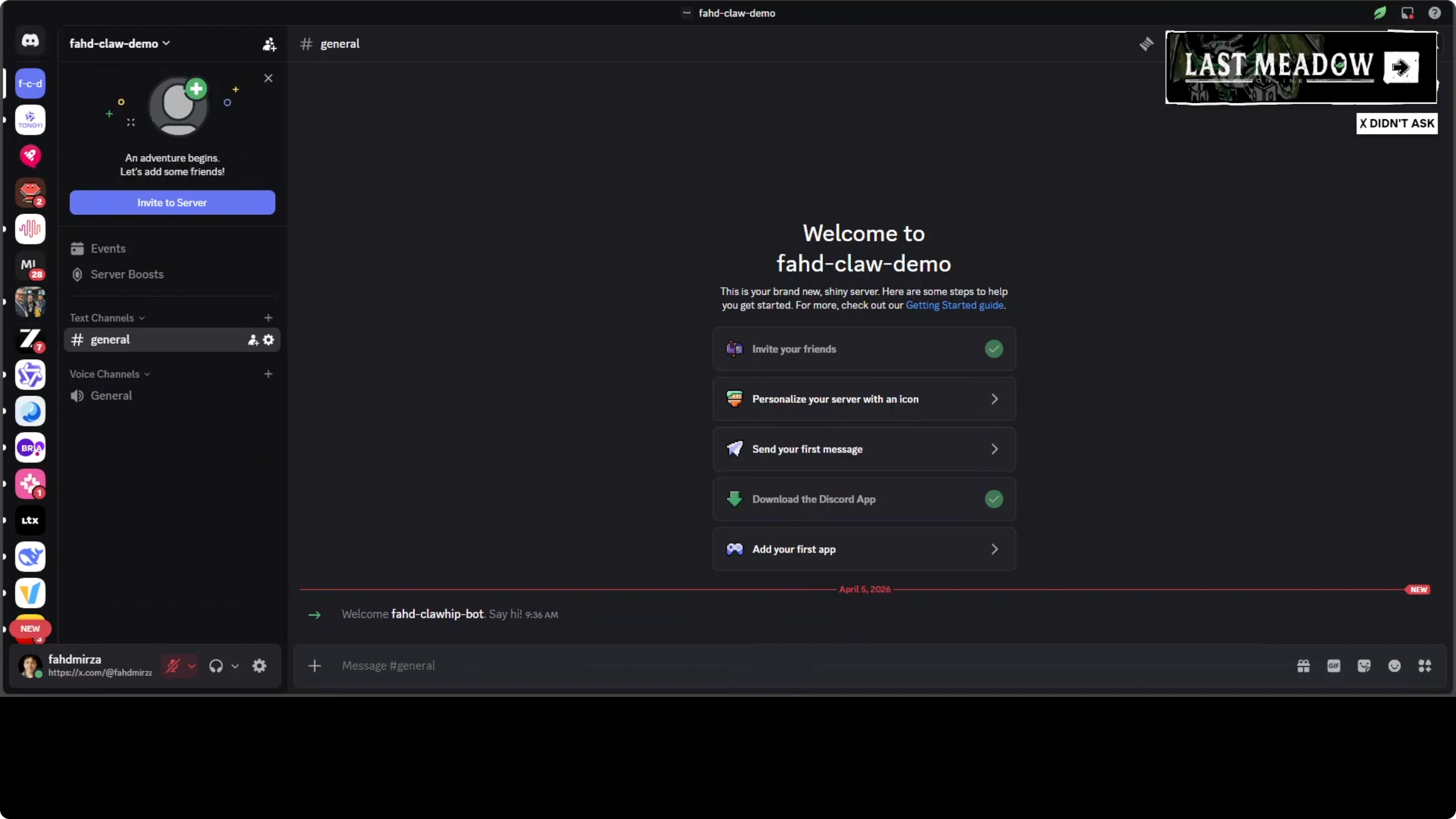
Create a free Discord account at discord.com and log in. Click the plus icon on the left to add a server. Choose Create My Own and give it any name.
Create an application and bot
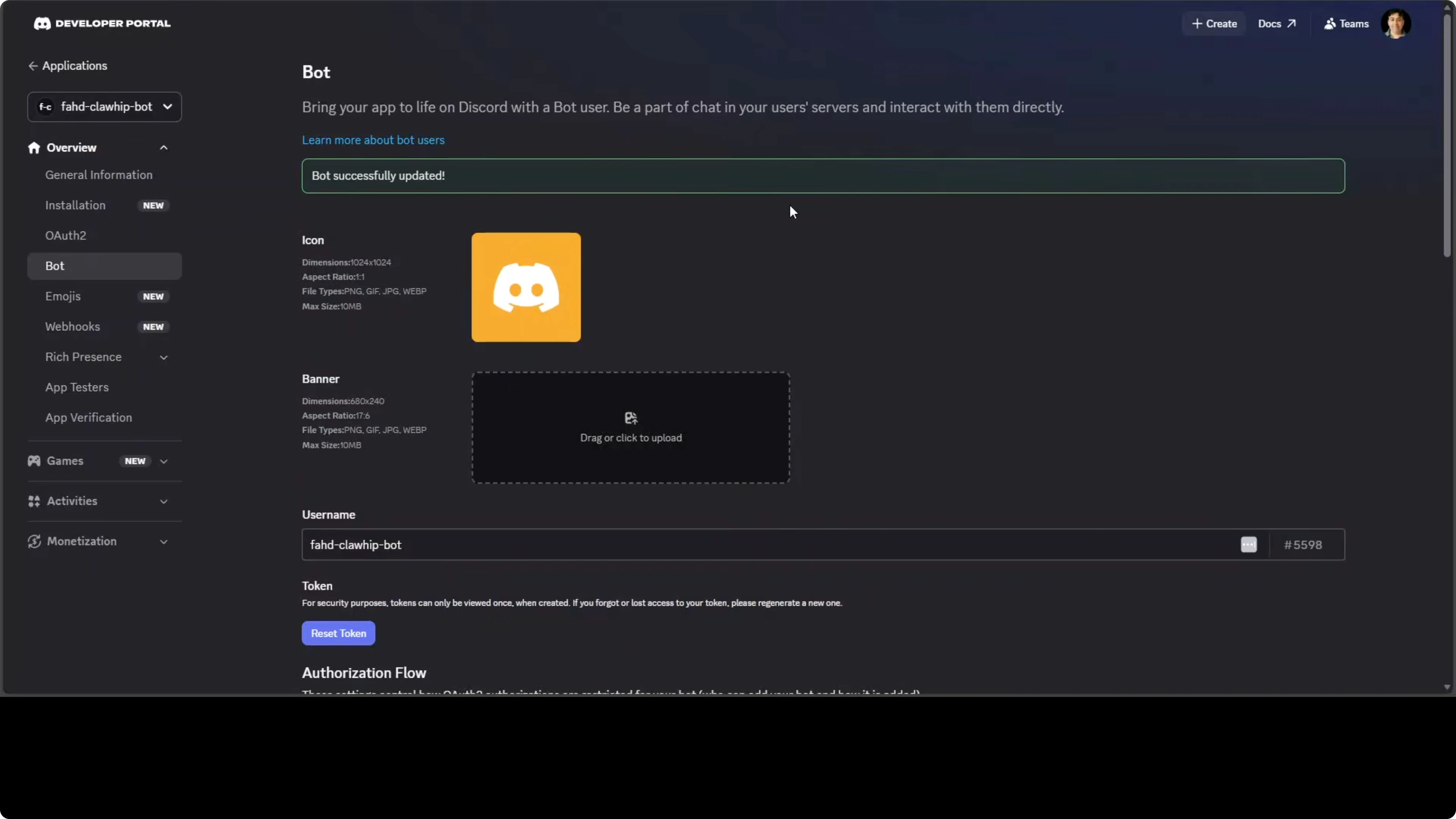
Open the Discord Developer Portal at discord.com/developers. Click New Application and name it. Open your application, go to Bot on the left, and create a bot.
Click Reset Token to generate a bot token and save it securely. Enable the Message Content Intent. Under Bot Permissions, grant View Channel and Send Messages only.
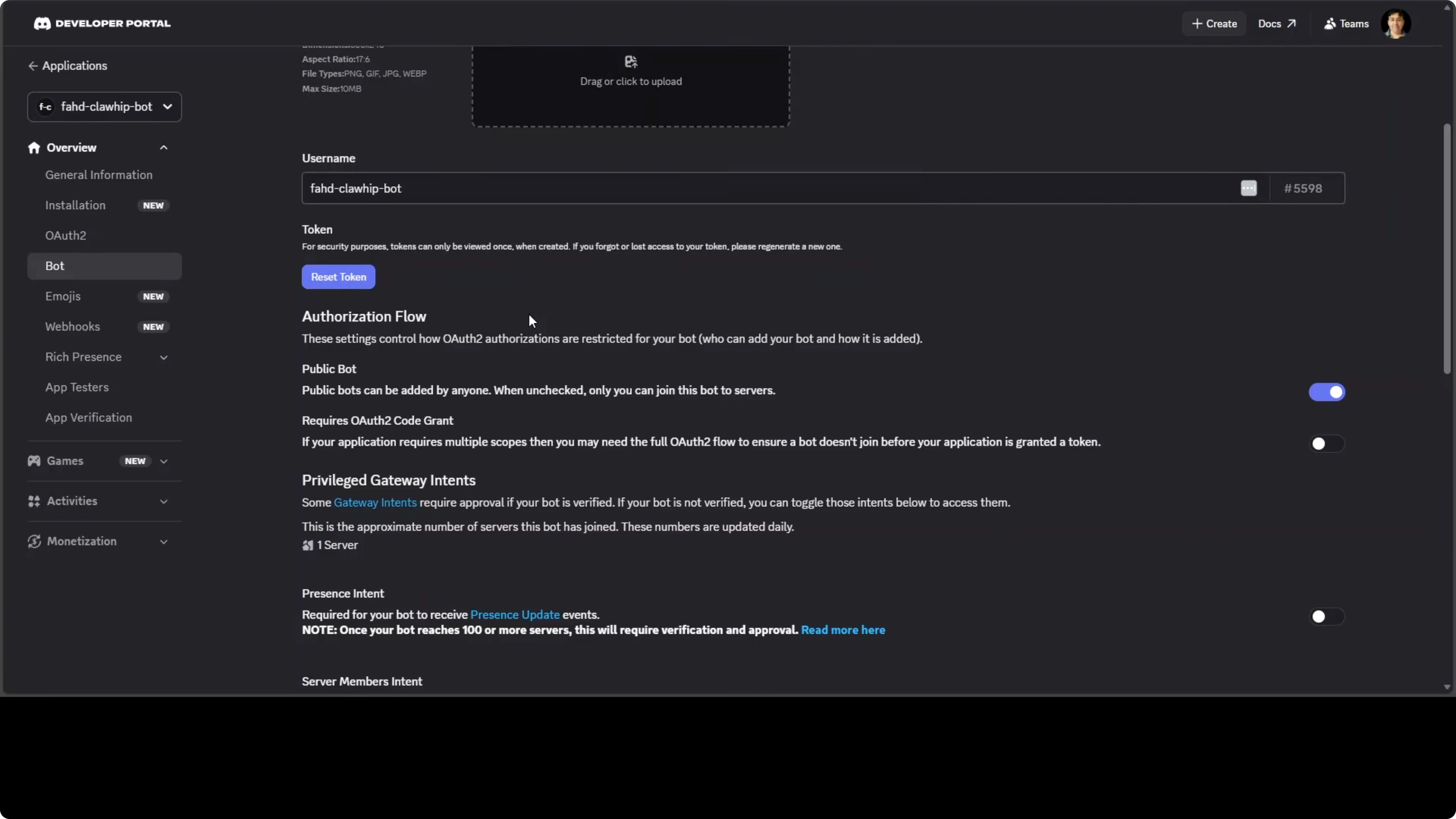
Go to OAuth2 and generate the URL to add the bot to your server. Open the URL, authorize the bot, and confirm it appears in your server’s member list. Right click your target text channel, copy the Channel ID, and save it for configuration.
Install ClawHip on Ubuntu
Prepare the host
Use an Ubuntu machine with Git and tmux available on PATH. Ensure outbound HTTPS access so ClawHip can reach Discord’s APIs. Have your Discord bot token and channel ID ready.
Verify the install once you add the ClawHip binary to your PATH.
clawhip --versionConfigure ClawHip
Interactive config
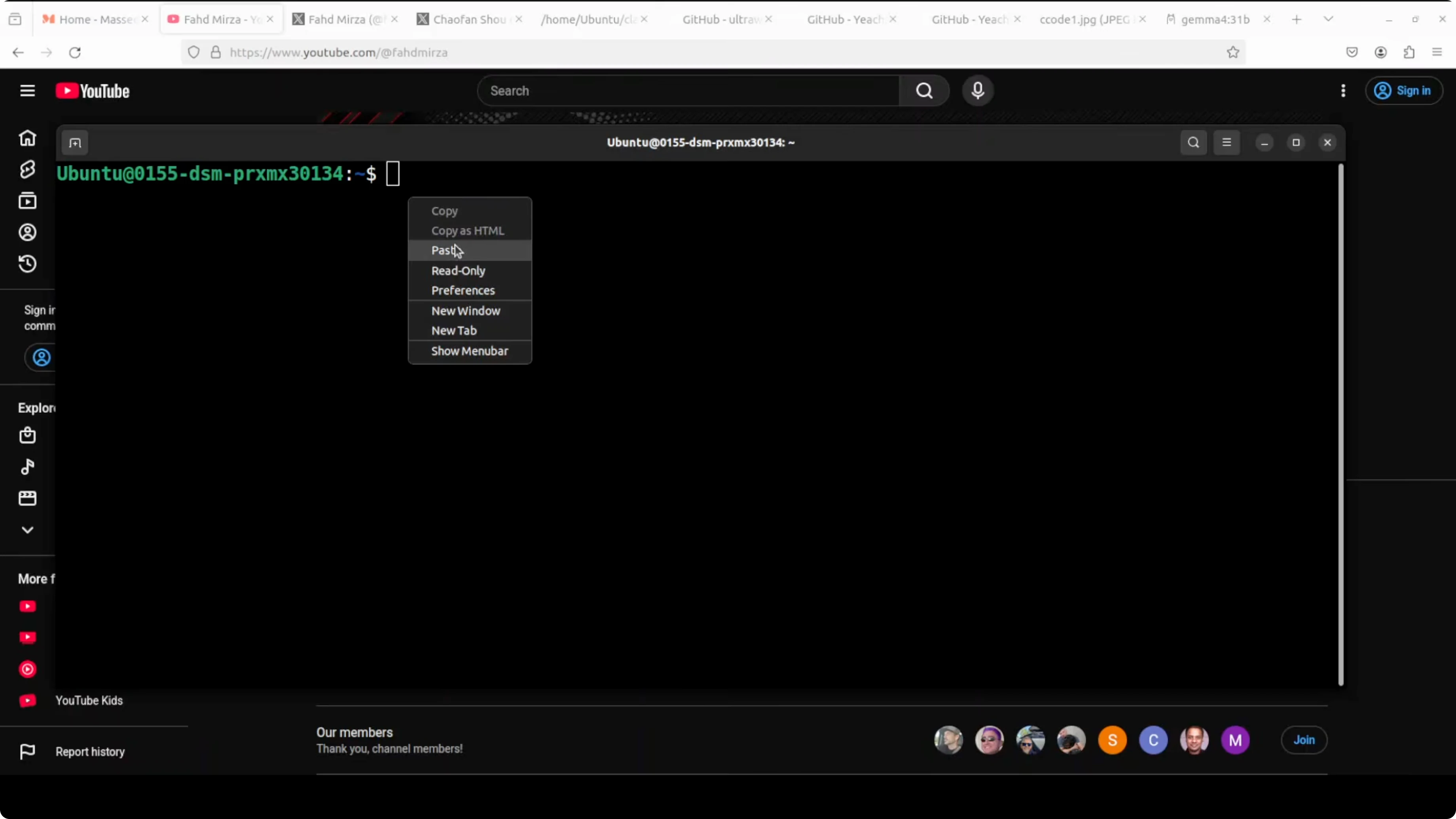
Run the configuration wizard. Enter your Discord bot token when prompted and save.
Enter your Discord channel ID and save. Confirm settings, then exit the wizard.
Start the ClawHip daemon so it can watch your repos and sessions. Keep it running in the background.
Test notifications
Send a test message
Use your terminal to confirm ClawHip can post to your Discord channel. You should see a message like “ClawHip is alive” appear in your server once the daemon is active.
Trigger from Git
Initialize or open any Git repo and make a commit. ClawHip will catch the commit and post details in Discord.
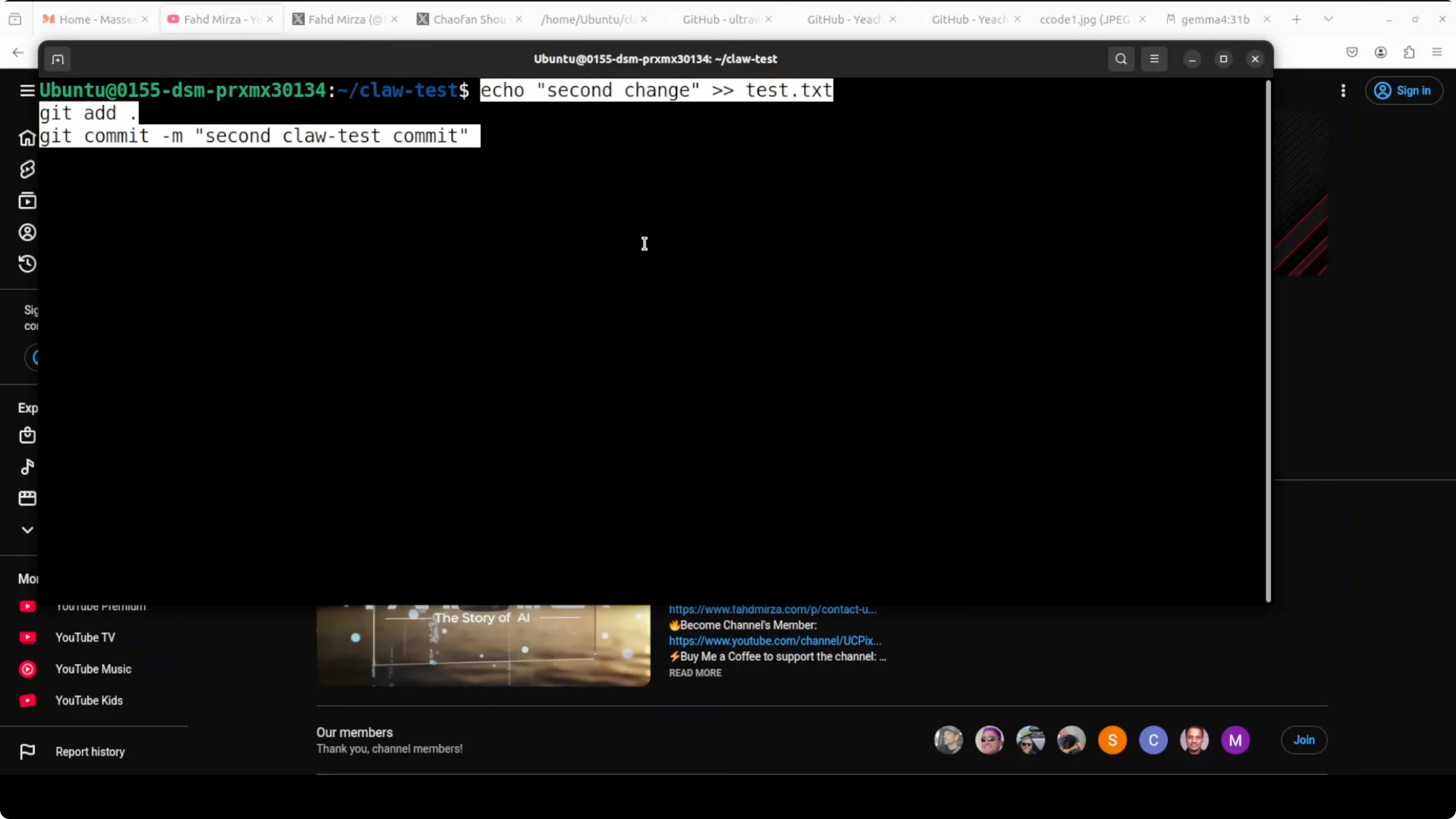
git add -A
git commit -m "Wire ClawHip notifications"
git push origin main
Watch a tmux session
If you keep long running agents in tmux, ClawHip can report session status. Create a session and let your agents or scripts run inside it.
tmux new -s agents
# run your agent loop here
How Claw Code and Clawhip Rebuilt the Claude Code Agent System? In practice
The loop that built Claw Code
An architect agent planned tasks, an executor agent wrote code, and a reviewer agent validated changes. Each commit they pushed showed up in Discord through the night. In the morning, the developer opened Discord and saw the entire build history in one channel.
The developer did not babysit a terminal. The agents did the work. ClawHip stitched the process together and kept the human informed without bloating the agents’ context window.
If you want to pair Qwen models with Claude Code for agent work, see our notes on using Qwen with Claude Code.
What you need for the full loop
To run the exact full agent loop that built Claw Code, you will also need OhMyCodex, which currently requires an OpenAI API key. You can also call Claude Code, which requires an Anthropic API key.
If you want to avoid vendor keys, here is a practical path to run Claude Code with Ollama models. For model choices that pair well with Claude Code, compare our quick take on Qwen and Claude Code Opus.
Troubleshooting
Common agent pitfalls
If your agent framework reports Antigravity termination during execution, review this fix guide: Agent execution terminated error. It covers failure modes that cause silent stops.
If messages from the executor are cut off or truncated in logs, this note on agent executor message truncation can help you validate and adjust your settings. Keep an eye on token limits across the planner, executor, and reviewer.
Use cases
Overnight ports and refactors are the most obvious fit. Give high level direction, let agents run, and wake up to commits, diffs, and alerts in Discord. You stay out of the terminal and in a clear audit trail.
Continuous integration monitors benefit too. Each push announces itself with branch, hash, and summary so you can glance at status without context switching. Failures ping immediately.
Code review workflows get a boost when reviewer agents annotate changes and ClawHip posts summaries. Open source sprints also win from a shared Discord channel where the entire team watches progress in real time.
Final thoughts
ClawHip is the quiet backbone that kept agents coding and humans informed during the Claw Code rebuild of Claude Code. Set up Discord, configure ClawHip, and let your commits narrate the story for you. When you are ready for the full loop, add OhMyCodex and Claude Code or use local models to keep costs under control.
Subscribe to our newsletter
Get the latest updates and articles directly in your inbox.

Related Posts

8 Best Claude Code Plugins in 2026 (You Need to Know)
8 Best Claude Code Plugins in 2026 (You Need to Know)

7 Best Claude Code Skills (You Need to Know)
7 Best Claude Code Skills (You Need to Know)
Claude Code Desktop IDE Features (You Need to Know)
Claude Code Desktop IDE Features (You Need to Know)