
Table Of Content
- Agentic AI Foundation - Standard for AI Agents - A Big Achievement
- Why a Common Standard for Agents Was Needed
- What the Agentic AI Foundation Brings
- The Focus of AAIF
- The Three Cornerstone Projects Under AAIF
- Model Context Protocol - A Universal Connector for Agents
- Goose - A Local-first Agent Framework Built on MCP
- agents.md - A Simple File That Makes Coding Agents Behave
- How These Pieces Fit Together
- Quick Reference - Projects and Contributions
- Unified Governance Creates Stability
- Backing and Membership
- Platinum Members
- Gold Members
- Silver Members
- Associate Membership
- Why AAIF’s Scope Matters
- The Current State of Agents - Too Many Ways to Do the Same Thing
- A Proven Model for Open Collaboration
- What Success Would Look Like
- Summary - Agentic AI Foundation Sets the Standard
- Practical Guide - Building on AAIF Standards
- Final Perspective
Linux Foundation Unifies Agentic AI: New AAIF Standard
Table Of Content
- Agentic AI Foundation - Standard for AI Agents - A Big Achievement
- Why a Common Standard for Agents Was Needed
- What the Agentic AI Foundation Brings
- The Focus of AAIF
- The Three Cornerstone Projects Under AAIF
- Model Context Protocol - A Universal Connector for Agents
- Goose - A Local-first Agent Framework Built on MCP
- agents.md - A Simple File That Makes Coding Agents Behave
- How These Pieces Fit Together
- Quick Reference - Projects and Contributions
- Unified Governance Creates Stability
- Backing and Membership
- Platinum Members
- Gold Members
- Silver Members
- Associate Membership
- Why AAIF’s Scope Matters
- The Current State of Agents - Too Many Ways to Do the Same Thing
- A Proven Model for Open Collaboration
- What Success Would Look Like
- Summary - Agentic AI Foundation Sets the Standard
- Practical Guide - Building on AAIF Standards
- Final Perspective
Agentic AI Foundation - Standard for AI Agents - A Big Achievement
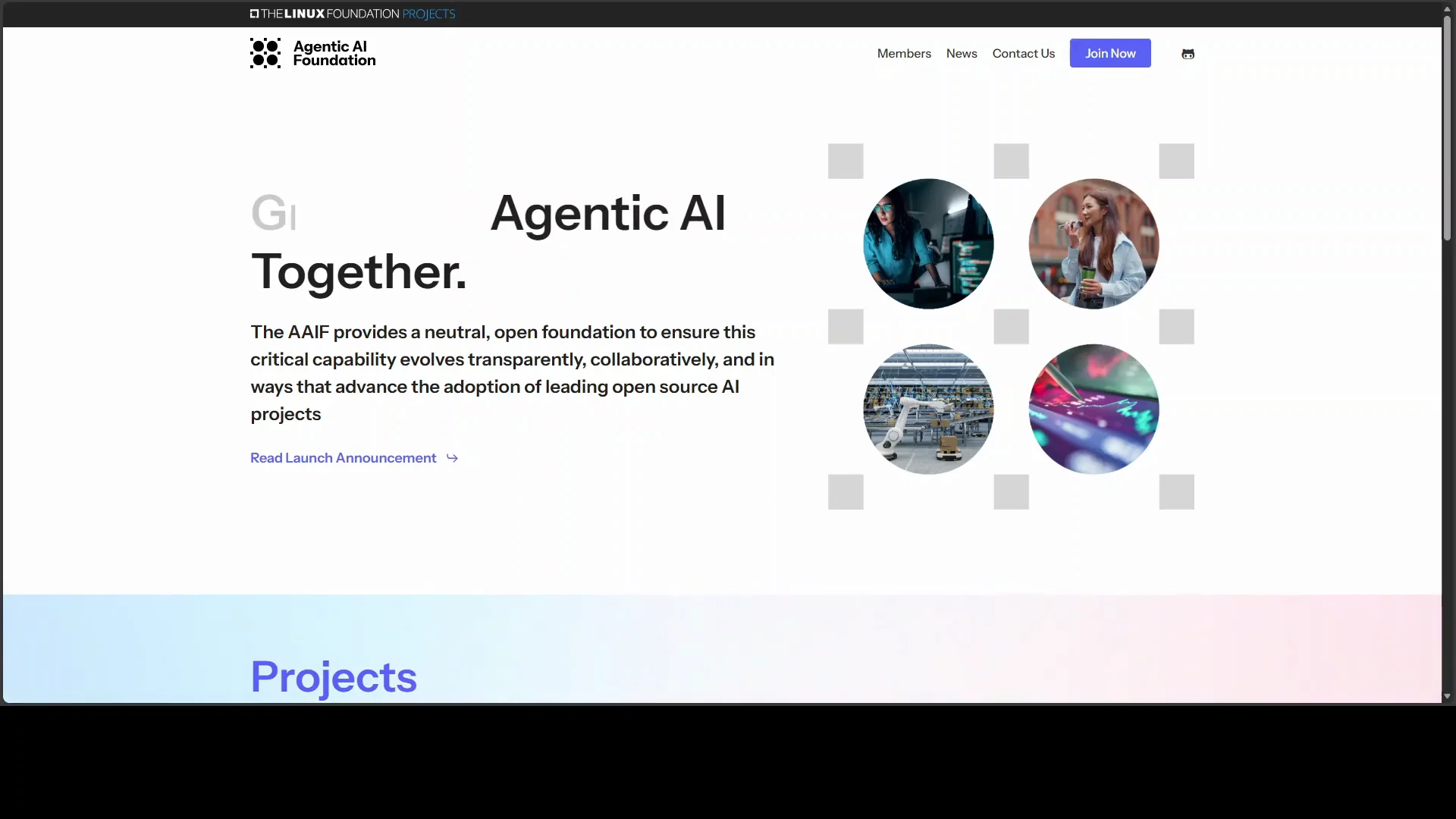
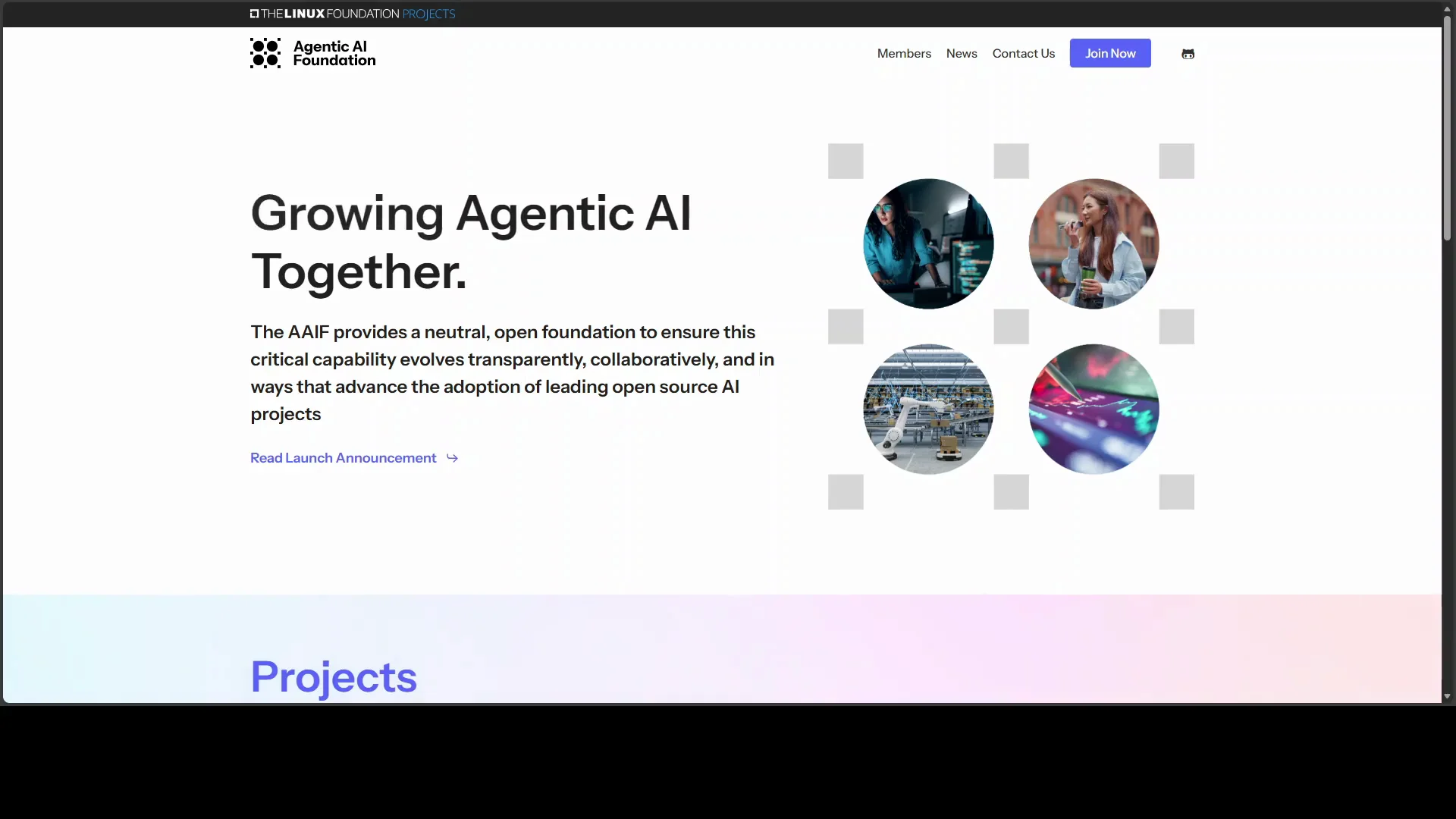
Over the past year, a fragmented set of competing agent frameworks has found a shared home. On December 9, 2025, the Linux Foundation announced the formation of the Agentic AI Foundation, or AAIF. It is a neutral governing body that brings three influential open-source projects in agentic AI under one roof: Goose, agents.md, and Model Context Protocol.
These projects mark a clear shift. I will touch on them shortly. First, here is what this new initiative changes for developers and organizations building AI agents.
Why a Common Standard for Agents Was Needed
If you have tried building AI agents recently, you know the problem. Every major lab and startup released its own way of connecting language models to tools, code bases, and external data.
Anthropic had one approach. OpenAI had yet another. Google had another, and so on. Developers were forced to pick a side or maintain multiple incompatible integrations.
The result was agent workflows that felt inconsistent, brittle, and hard to take to production. That is where this initiative matters.
What the Agentic AI Foundation Brings
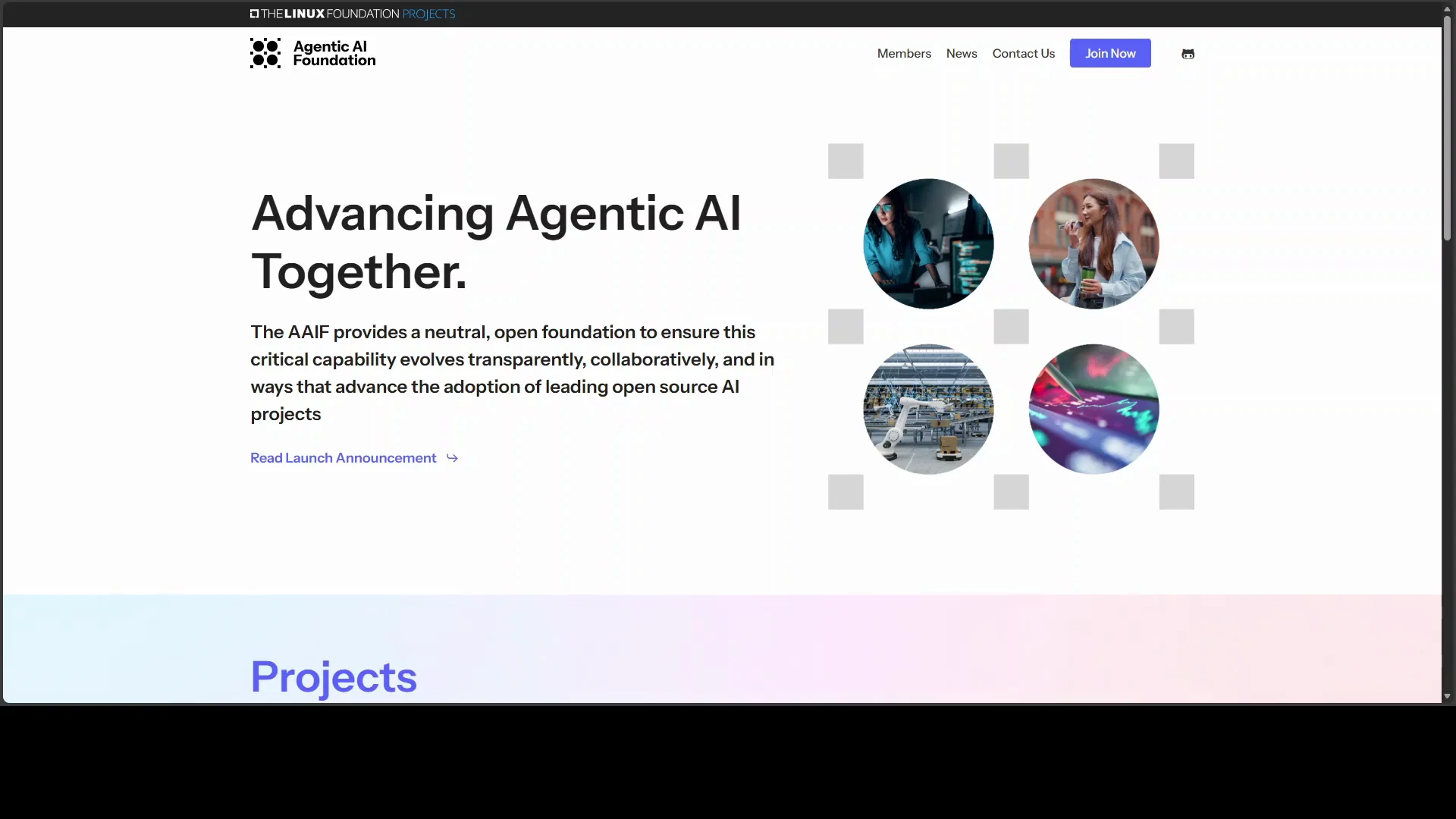
The Agentic AI Foundation gives the ecosystem a single vendor-neutral place to evolve shared standards. It follows the same model that helped turn projects like Kubernetes, PyTorch, and Linux into the backbone of modern computing.
At launch, three cornerstone projects were donated to the new foundation. Together they create a stable base for building agent systems that connect to tools, data, and code in a predictable way.
The Focus of AAIF
AAIF is not trying to build agents themselves. Its job is narrow and important: maintain the shared infrastructure, protocols, formats, and conventions that allow thousands of agents, frameworks, and tools to work together reliably.
- Protocols that define how agents connect to tools, APIs, and data
- Formats that make agent instructions and context portable
- Conventions that align behavior across different runtimes and repositories
This coordination reduces fragmentation and gives companies confidence to build for the long term.
The Three Cornerstone Projects Under AAIF
Model Context Protocol - A Universal Connector for Agents
Anthropic contributed the Model Context Protocol, or MCP, which was released just over a year ago. MCP has become a widely used standard for securely connecting AI models to tools, APIs, and private data.
Today there are already more than 10,000 public MCP servers. The protocol is supported by Claude, Gemini, ChatGPT, Copilot, Mistral, Cursor, VS Code, and many others. Think of MCP as the HTTP of agentic AI - a simple, secure, widely adopted way for agents to reach out and interact with the world.
Goose - A Local-first Agent Framework Built on MCP
Block, the company behind Square and Cash App, donated Goose. Goose is an open-source, local-first agent framework built from the ground up on MCP.
It gives developers a reliable, extensible environment to compose complex agent workflows that run safely on laptops, servers, or in the cloud. It is designed for production use cases where consistency and trust matter.
agents.md - A Simple File That Makes Coding Agents Behave
OpenAI contributed agents.md, a simple convention that has already been adopted by over 60,000 repositories. It is just a Markdown file at the root of a project that tells any coding agent how the code base is structured, what commands to run, and how humans prefer things to be done.
Because it is human readable and lives alongside the code, it makes agent behavior more predictable across different tools and repositories.
How These Pieces Fit Together
- MCP defines a standard way for agents to connect to tools, data, and services.
- Goose provides a production-ready framework for building and running agent workflows on top of MCP.
- agents.md gives agents consistent instructions inside each repository so they act predictably and follow project norms.
This combination is what AAIF now stewards under one open governance structure.
Quick Reference - Projects and Contributions
| Project | Contributor | Purpose | Adoption and Support |
|---|---|---|---|
| Model Context Protocol (MCP) | Anthropic | Secure, standardized connection between models and tools, APIs, and data | 10,000+ public MCP servers, supported by Claude, Gemini, ChatGPT, Copilot, Mistral, Cursor, VS Code, and more |
| Goose | Block | Local-first agent framework built on MCP for safe, reliable workflows | Production-focused, runs on laptops, servers, and cloud |
| agents.md | OpenAI | Markdown spec in repo root to guide coding agents on structure, commands, and preferences | Adopted by 60,000+ repositories |
Unified Governance Creates Stability
By placing MCP, Goose, and agents.md under the same open governance structure, AAIF creates a stable foundation that companies can confidently build on. Teams no longer need to worry that the rules will change underneath them if one lab shifts direction. That stability is very important for enterprise adoption and cross-vendor compatibility.
Backing and Membership
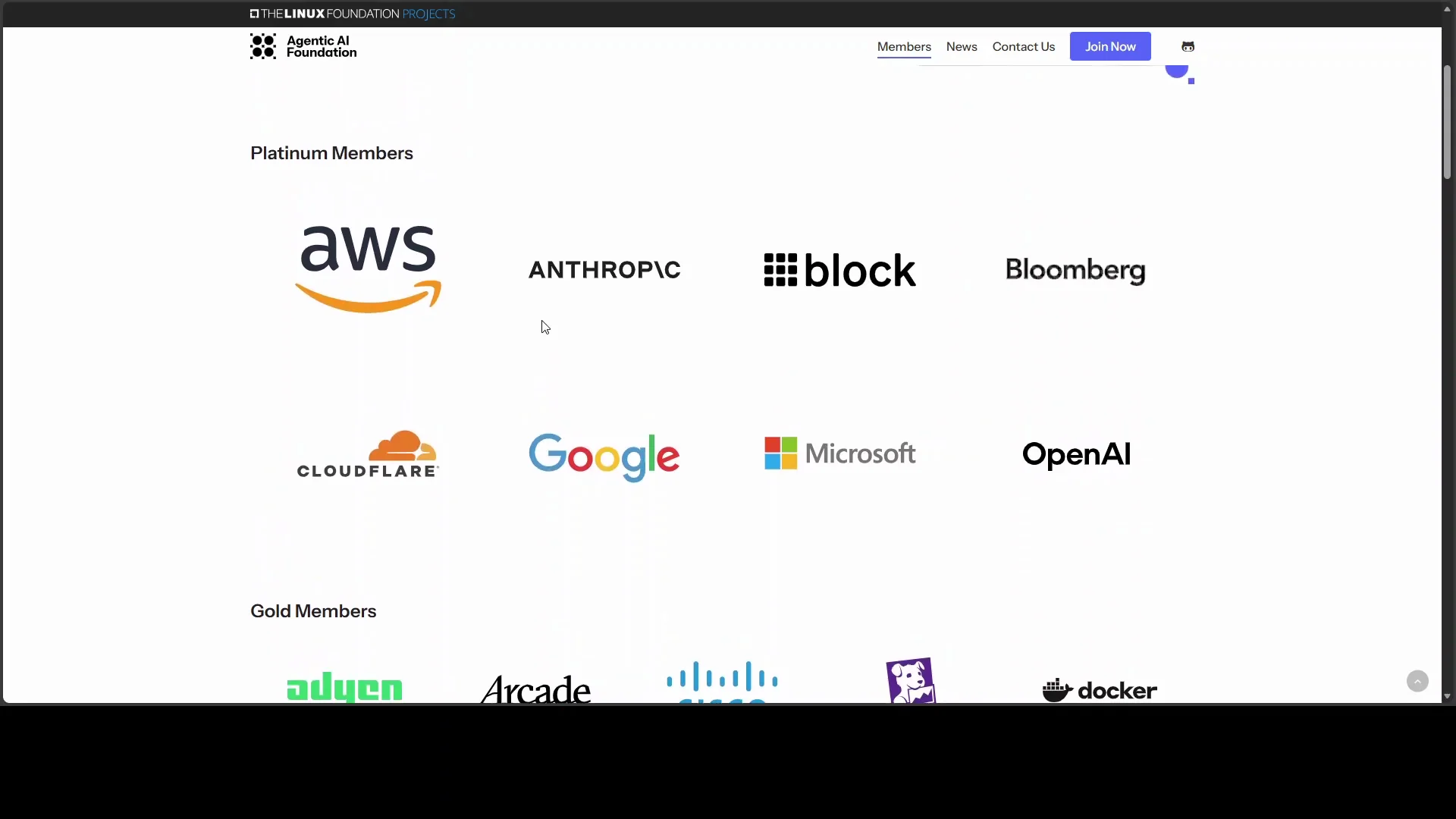
The backing for this initiative is broad. The membership list is managed publicly and is being populated.
Platinum Members
Platinum members include:
- AWS
- Anthropic
- Block
- Bloomberg
- Microsoft
- OpenAI
That is almost every major player in the space agreeing to collaborate in public. One notable gap is the absence of Chinese companies. They should be part of it, given their contributions to open-source models. I am talking about Alibaba, DeepSeek, MiniMax, Zhipu, Baidu, and more.
The platinum membership is around 350,000. It is not available at the moment. It may be filled up.
Gold Members
The gold tier includes several large names. It is not that they are small players.
- Oracle
- Salesforce
- IBM
Oracle not being a platinum member is surprising. Salesforce and IBM have been releasing at a rapid clip. Oracle is very big in the data center side of things and has significant scale in Oracle Cloud Infrastructure. The price for this is 10,000.
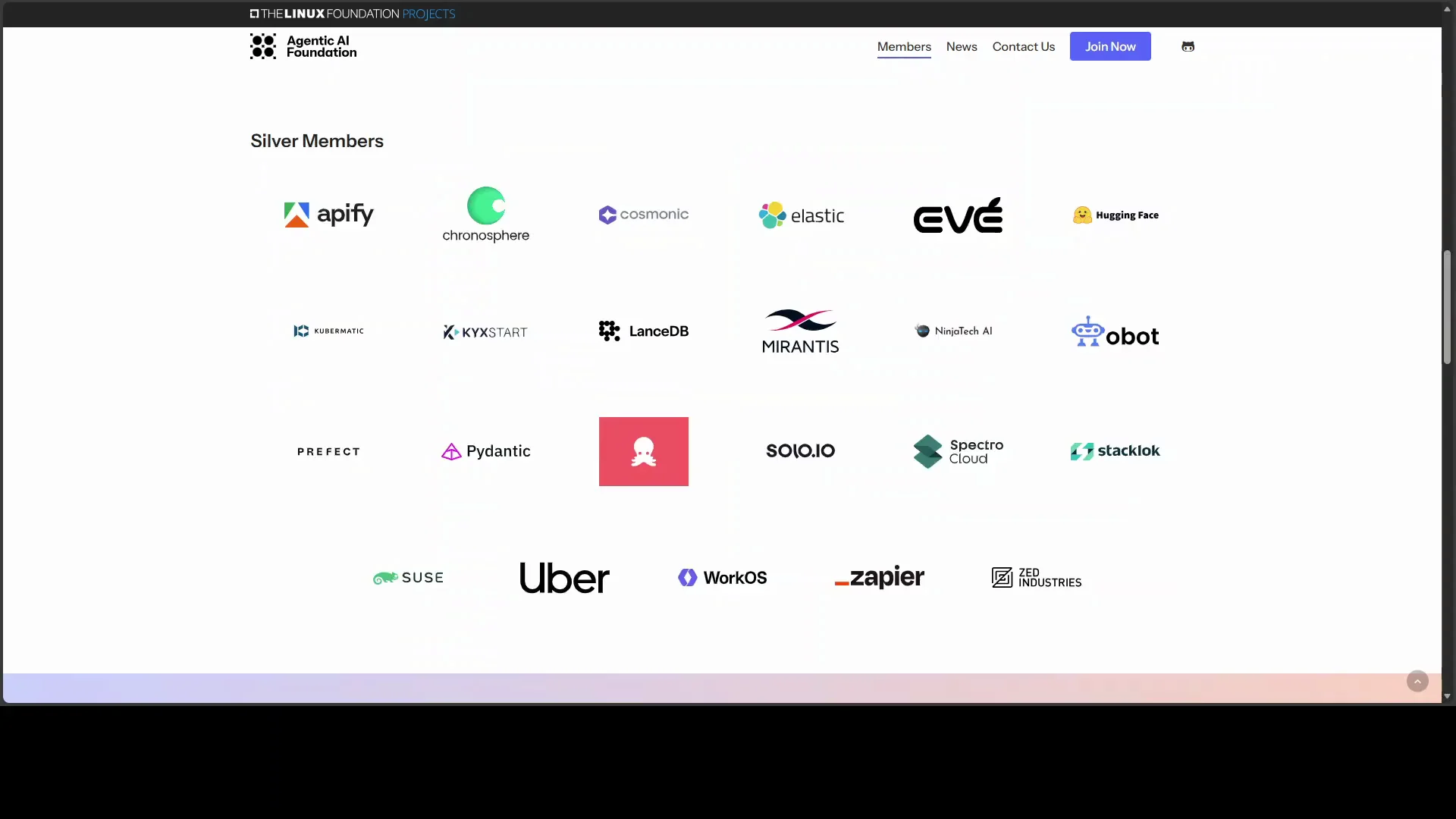
Silver Members
Silver members include:
- Hugging Face
- Paid
- Stack Log
- Zapier
- Uber
Associate Membership
Associate membership has no cost.
Why AAIF’s Scope Matters
AAIF is not building agent products. Its purpose is to maintain the shared infrastructure that makes agents interoperable and reliable. That means aligning on:
- Protocols like MCP so every agent can connect to tools and data in a standard way
- Formats that keep context, commands, and plans consistent across frameworks
- Conventions like agents.md so coding agents follow project norms across repositories
This is how you get thousands of independent projects to work together without fragile glue code.
The Current State of Agents - Too Many Ways to Do the Same Thing
There are thousands of agent frameworks, tools, and repositories. There is no common standard. Every implementation varies. How to do tool calling differs from one setup to the next. That fragmentation makes it hard to compare approaches and even harder to ship reliable systems.
AAIF gives the community a way to converge. With shared protocols, files, and conventions, the same agent logic can run across environments with much less friction.
A Proven Model for Open Collaboration
This approach is familiar. Decades ago, the Linux Foundation provided a neutral home for the operating system that now runs almost every server, including supercomputers. More recently, it shepherded Kubernetes into the standard for container orchestration. Now it is doing the same for the emerging stack of agentic AI.
The hope shared by everyone from startups to the largest cloud providers is simple.
- Prevent fragmentation
- Reduce vendor lock-in
- Accelerate safe, widespread adoption of autonomous AI systems
Yes, that is a tall order, but an important one.
What Success Would Look Like
The agent future will still be built by thousands of companies and individual contributors. For the first time, they will be building on standards that belong to everyone.
- Agents connect to tools and data through MCP without one-off integrations
- Repositories declare norms with agents.md so coding agents behave predictably
- Frameworks like Goose give teams a reliable way to run agents locally and in production
This small shift in governance could end up being one of the most important developments in AI for this year.
Summary - Agentic AI Foundation Sets the Standard
- AAIF was launched by the Linux Foundation on December 9, 2025.
- It unites three key projects: MCP from Anthropic, Goose from Block, and agents.md from OpenAI.
- The goal is vendor-neutral standards that make agent systems interoperable and production-ready.
- Major backers include AWS, Anthropic, Block, Bloomberg, Google, Microsoft, and OpenAI, with broad participation across gold and silver tiers.
- The scope is focused: keep the protocols, formats, and conventions stable so the ecosystem can build with confidence.
- The expected outcomes are less fragmentation, less lock-in, and faster, safer adoption of autonomous AI.
Practical Guide - Building on AAIF Standards
Use this simple sequence to align your agent projects with AAIF-backed standards.
- Define tool access through MCP
- Expose your tools, APIs, and data sources as MCP servers.
- Use MCP clients in your agents to request capabilities securely.
-
Publish an agents.md file
- Place agents.md at the root of your repository.
- Document project structure, commands, test instructions, and coding norms.
-
Orchestrate workflows with Goose
- Compose multi-step agent workflows that call MCP servers.
- Run locally, on servers, or in the cloud for consistent behavior across environments.
-
Keep configurations portable
- Prefer standard formats and conventions supported by the AAIF projects.
- Avoid custom glue that locks you into one setup.
This alignment brings predictability and reduces the cost of moving from prototypes to production.
Final Perspective
AAIF gives agent developers a common foundation that was missing. With MCP, Goose, and agents.md under open governance, the ecosystem finally has a shared set of building blocks that can endure. Global participation will make it stronger, and broader membership would reflect the reality of who is pushing the field forward.
This initiative gives the community a stable path to build agents that work together across tools, code bases, and vendors. It is a big achievement at the right time.
Subscribe to our newsletter
Get the latest updates and articles directly in your inbox.

Related Posts
8 Best Claude Code Plugins in 2026 (You Need to Know)
8 Best Claude Code Plugins in 2026 (You Need to Know)
7 Best Claude Code Skills (You Need to Know)
7 Best Claude Code Skills (You Need to Know)
Claude Code Desktop IDE Features (You Need to Know)
Claude Code Desktop IDE Features (You Need to Know)