
Table Of Content
- What is MoCam: Exploring Extreme Viewpoint 4D Motion Capture Technology
- Overview
- Key Features
- Use Cases
- Performance & Showcases
- How MoCam Works in Simple Terms
- The Technology Behind MoCam
- Getting Started
- Practical Tips
- Roadmap and Open Source Plan
- FAQs
- What makes MoCam different from regular video filters
- Does MoCam work with fast motion
- Can I use MoCam today
- What kind of input do I need
- Is there a license I should know about
MoCam: Exploring Extreme Viewpoint 4D Motion Capture Technology
Table Of Content
- What is MoCam: Exploring Extreme Viewpoint 4D Motion Capture Technology
- Overview
- Key Features
- Use Cases
- Performance & Showcases
- How MoCam Works in Simple Terms
- The Technology Behind MoCam
- Getting Started
- Practical Tips
- Roadmap and Open Source Plan
- FAQs
- What makes MoCam different from regular video filters
- Does MoCam work with fast motion
- Can I use MoCam today
- What kind of input do I need
- Is there a license I should know about
What is MoCam: Exploring Extreme Viewpoint 4D Motion Capture Technology
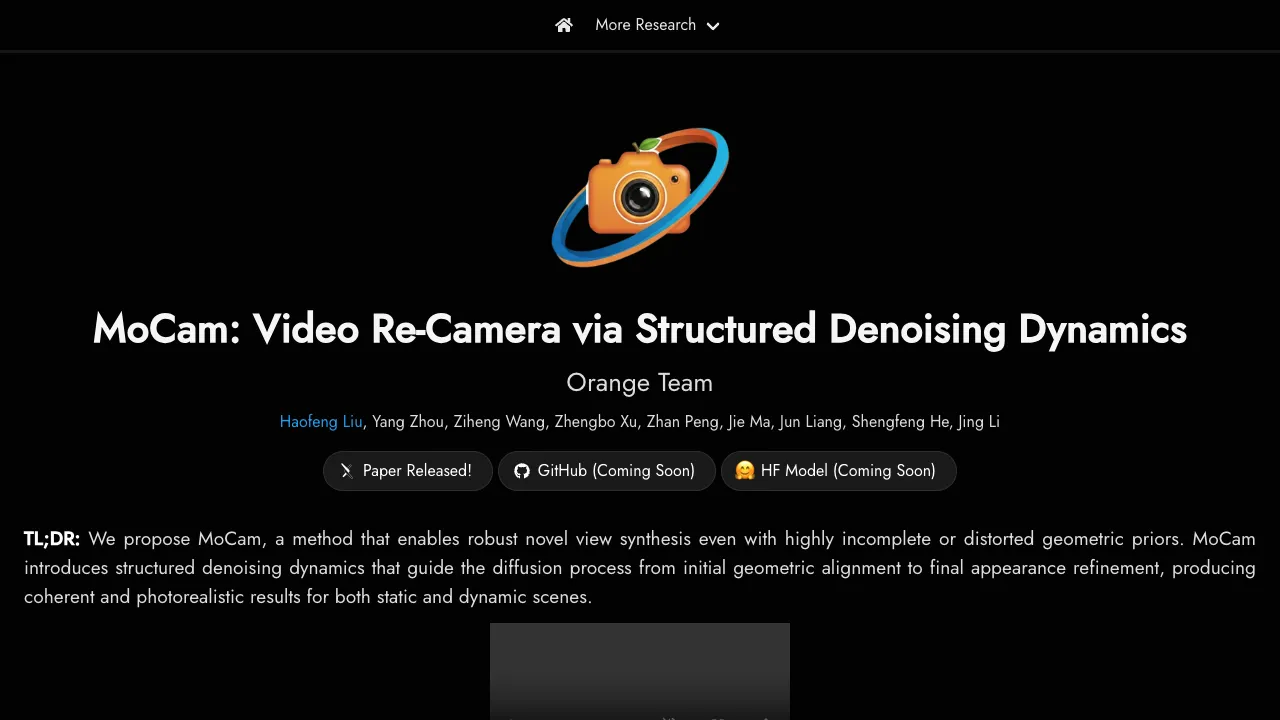
MoCam is a research project that creates new camera views from regular videos. It can keep people and objects consistent while the camera path moves a lot, like spinning around, zooming in, or pulling back.

It works for both still scenes and moving scenes. The key idea is to guide a smart noise removal process so the frames line up first, then the look and feel get refined.
Overview
MoCam is presented by the Orange 3DV Team. The paper is on arXiv, and the team plans to share code and models after a review process.
| Item | Details |
|---|---|
| Type | Video re camera and novel view synthesis method |
| Purpose | Create new camera paths and viewpoints from a source video, even when geometry is incomplete or distorted |
| Main features | Large movement paths, complex paths, dolly zoom, zoom in and out, bullet time |
| Works on | Static scenes and dynamic scenes |
| Output | High quality re camera videos and images from new viewpoints |
| Status | Paper available on arXiv 2605.12119. Code and model coming soon |
| Team | Orange 3DV Team |
| Project page | MoCam website |
| Paper link | arXiv 2605.12119 |
| Code | Coming soon |
| Model | Coming soon |
If you want to discover more tools in this space, check our AI tools directory.
Key Features
-
Large movement paths MoCam can keep the scene stable even when the virtual camera moves far and fast.
-
Complex paths You can follow curves and tricky paths that change direction quickly.
-
Dolly zoom Change focal length while moving the camera to get that classic movie effect.
-
Zoom in and out Get closer or pull back while keeping details sharp.
-
Bullet time Circle around a subject to get frozen in time effects.

Use Cases
-
Video editing Add new camera moves to a clip after it was filmed.
-
Social content Turn a standard phone video into a dramatic motion shot.
-
Film preization Test shots and camera choices without a reshoot.
-
Sports and action replay Show the same moment from a different angle for clear breakdowns.
-
Research and education Study motion and depth by changing the view in small steps.
Performance & Showcases
Showcase 1 — TL DR summary of the core method TL;DR: We propose MoCam, a method that enables robust novel view synthesis even with highly incomplete or distorted geometric priors. MoCam introduces. This clip highlights how the system starts by aligning rough shapes, then improves the look for clean output across still and moving scenes.
Showcase 2 — Large movement paths demo Demo. Watch how the viewpoint travels far while the subject stays stable and clear. The clip shows the effect across different moments in the same scene.
Showcase 3 — Another look at long and complex moves Demo. This example pushes the movement even more to show how the method holds up. It keeps details steady while the camera sweeps around.
How MoCam Works in Simple Terms
MoCam uses a two step denoising process. First it focuses on lining up the rough shape of the scene so different frames agree on where things are. Then it cleans up texture and color to match the real look.
This guided process starts from a weak or even wrong geometry guess. Even if the first guess is messy, the method pulls the frames toward a good result step by step.
The team reports strong results on both still scenes and moving scenes. Camera paths like zoom, dolly, and bullet time also look steady.
For model choices in your broader AI projects, see our Qwen model recommender.
The Technology Behind MoCam
-
Structured denoising dynamics The model adds and removes noise in a planned way. Early steps fix structure and later steps focus on appearance.
-
From geometry to appearance By splitting these goals, the method avoids mixing shape and color too early. This helps when the input geometry is incomplete or bent.
-
Works on static and dynamic content The same idea applies to a quiet room or a dancing person. The process keeps the subject stable while the camera view changes.
Getting Started
There is no public code or model download yet. The team notes that both are coming soon after a review.
Here is what you can do today:
- Read the paper on arXiv 2605.12119 for the method details.
- Visit the project page to watch all demos and sample results.
- Star the repo to get updates when the code and model arrive.
If you face setup errors in similar projects, this error fixer guide may help you work through system issues.
Practical Tips
-
Pick clips with clear subjects Give the method a subject that is easy to track, like a person or a product.
-
Keep motion smooth when filming Even though MoCam can handle large moves, steady phone or camera motion makes results cleaner.
-
Try a mix of paths Test zoom, dolly, and orbit to see what fits your story.
Roadmap and Open Source Plan
-
Released The paper is live on arXiv 2605.12119.
-
Coming soon Code and a pretrained model are planned after a company review. Follow the project page for news.
FAQs
What makes MoCam different from regular video filters
MoCam does not just change colors or add effects. It rebuilds the view as if the camera moved in space, which is much harder than a simple filter.
Does MoCam work with fast motion
Yes, the method is designed for large movement paths. The process keeps structure first, then improves the look, which helps with fast moves.
Can I use MoCam today
You can read the paper and watch demos now. The team plans to release code and models after review, so keep an eye on the project page.
What kind of input do I need
A normal video is a good start. Clear subjects and steady recording help the output.
Is there a license I should know about
The team has not shared code or a license yet. Check the repository and project page for updates on this topic.
Read More: Ai Tools
If you find MoCam useful, consider starring the repository to get alerts. New updates will arrive on the project page first.
Image source: MoCam: Exploring Extreme Viewpoint 4D Motion Capture Technology
Subscribe to our newsletter
Get the latest updates and articles directly in your inbox.

Related Posts
Relit-LiVE: Enhancing Videos by Learning Environment Together
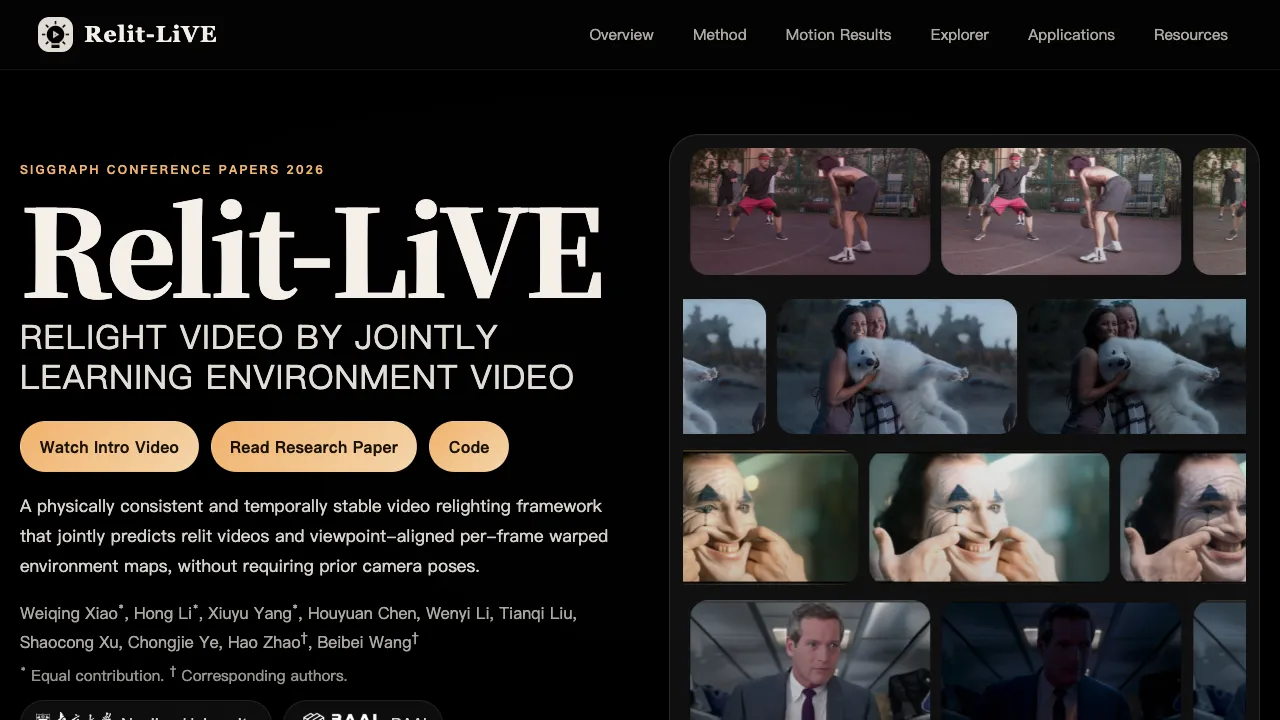
Relit-LiVE: Enhancing Videos by Learning Environment Together
CausalCine: Real-Time Video Narratives with Autoregression
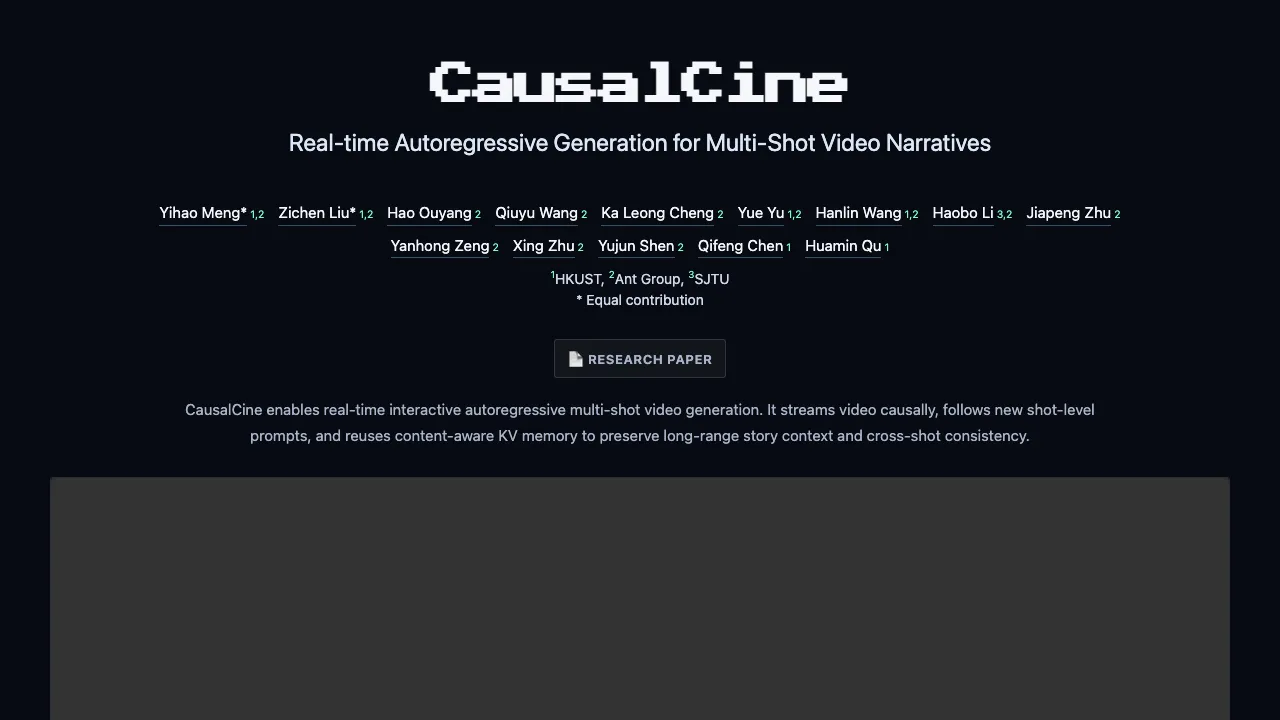
CausalCine: Real-Time Video Narratives with Autoregression

DreamX-World: The Future of Interactive World Models
DreamX-World: The Future of Interactive World Models